This structural engineering report evaluates the mechanical performance profiles, compressive strength thresholds ($N/mm^2$), and raw material mix designs of precast hollow and solid concrete blocks. It provides structural engineers and masonry contractors with a technical framework to optimize load distribution, calculate self-weight dead loads, and select the correct masonry unit for load-bearing and non-load-bearing structural walls.
Mechanical Performance Profiles of Precast Masonry
In modern structural design across Pakistan’s urban construction sectors, precast concrete blocks have largely replaced traditional clay bricks due to their dimensional accuracy, faster installation speed, and lower mortar consumption. However, specifying the correct type of block—hollow or solid—requires a clear understanding of their mechanical differences and structural performance under load.
Recommended Industrial Resources
Block Making Machine Price in PakistanTuff Tile Plant Price in Pakistan
Paver Block Machine Price in Pakistan
Automatic Block Making Machine
Used Block Machine for Sale
Fly Ash Bricks Machine
Concrete Batching Plant
Steel Structures in Pakistan
Industrial Shed Solutions
PEB Steel Buildings
Compressive strength is the primary metric used to evaluate a concrete block’s quality. It measures the maximum axial load a unit can withstand before structural crushing occurs. Selecting between hollow and solid units is not just a matter of comparing cost; it requires analyzing how the geometric configuration of the block affects stress distribution under vertical loads.
Technical Specifications: Mix Designs and Strength Thresholds
The compressive strength of any concrete masonry unit (CMU) depends heavily on its concrete mix ratio, compaction pressure during molding, and curing cycle quality. Units produced using manual hand-compaction molds often struggle to achieve consistent density, leading to localized weak spots and high structural variance.
The table below outlines the standard engineering baselines and material configurations for industrial-grade concrete blocks:
| Block Classification / Type | Standard Mix Ratio (Cement : Sand : Crush Dust) | Target Compressive Strength Range | Water Absorption Capacity | Primary Structural Application |
| Heavy-Duty Solid Block | $1 : 2 : 4 text{ or } 1 : 1.5 : 3$ | $7.0 text{ to } 10.5 text{ N/mm}^2$ ($1,000 – 1,500 text{ PSI}$) | $< 8%$ by weight | Multi-story load-bearing walls, foundations, retaining structures |
| Standard Solid Block | $1 : 3 : 6$ | $5.0 text{ to } 7.0 text{ N/mm}^2$ ($725 – 1,000 text{ PSI}$) | $< 10%$ by weight | Boundary walls, standard infill masonry panels |
| Load-Bearing Hollow Block | $1 : 2.5 : 5$ (Optimized grading) | $3.5 text{ to } 5.0 text{ N/mm}^2$ ($500 – 725 text{ PSI}$) | $< 12%$ by weight | Framed structure infill, low-rise load-bearing walls |
| Non-Load-Bearing Hollow | $1 : 4 : 8$ | $2.0 text{ to } 3.5 text{ N/mm}^2$ ($290 – 500 text{ PSI}$) | $< 15%$ by weight | Internal partition walls, acoustic isolation screens |
Analyzing Geometric Configurations and Stress Distribution
1. Solid Concrete Blocks (The High-Mass Standard)
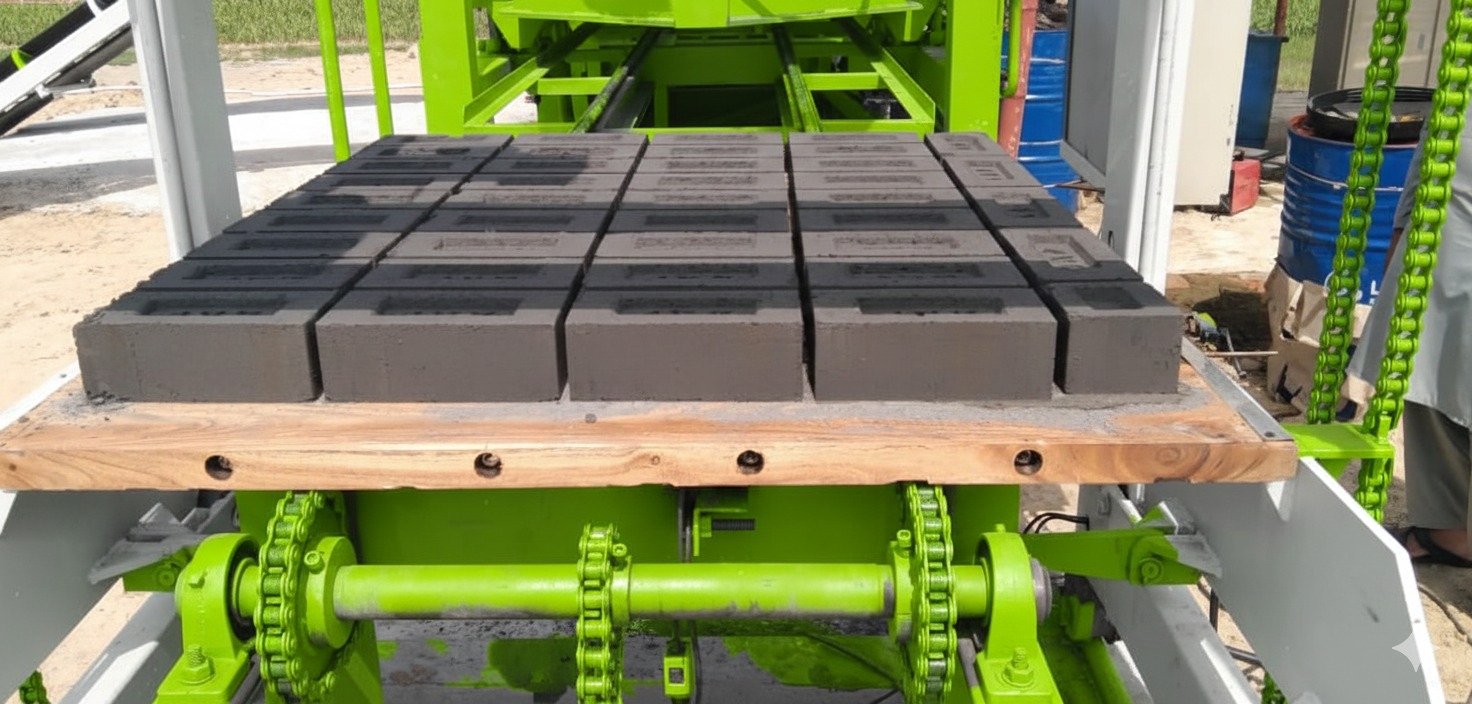
Solid concrete blocks feature a net concrete area equal to 75% or more of their gross cross-sectional area. Because they have a high mass and dense internal structure, they distribute loads uniformly across their entire footprint.
- Engineering Advantage: This high-density profile gives them exceptional load-bearing capacity, making them ideal for high-stress zones like basement foundations, load-bearing multi-story structures, and retaining walls designed to resist lateral earth pressure.
2. Hollow Concrete Blocks (The Engineered Void Profile)
Hollow concrete blocks contain one or more engineered core voids, reducing the net concrete area to less than 75% of the gross area (typically maintaining a 50% to 60% solid volume).
- Engineering Advantage: The core voids introduce two primary structural benefits. First, they reduce the self-weight dead load of the wall by up to 45% compared to solid masonry. This reduction significantly lowers the structural mass of the building, allowing for lighter, more cost-effective reinforced concrete (RCC) beams and foundations. Second, the air trapped inside the core voids acts as a natural barrier to thermal energy and sound waves, giving hollow blocks significantly better thermal insulation and acoustic dampening properties than solid blocks.
Production Standards and Compressive Consistency
To meet international ASTM C90 and British Standards (BS 6073) for compressive consistency, manufacturers must avoid manual mixing and high water-cement ratios. Excess water evaporates during curing, leaving micro-pores inside the concrete matrix that severely reduce the block’s eventual strength.
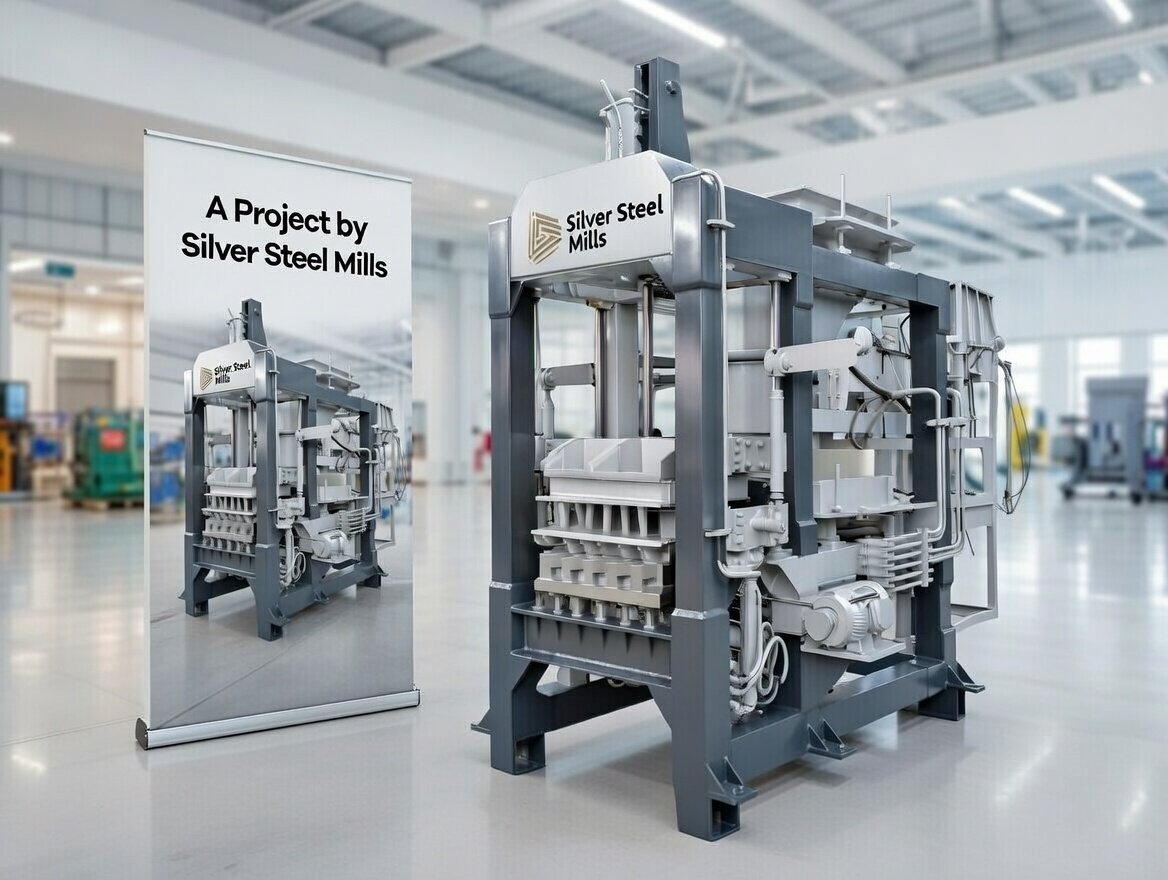
To maintain the high compaction pressures needed for dense, low-porosity masonry, large-scale construction developers work with advanced local machinery suppliers. Commercial block plants source their equipment through established engineering firms like Silver Steel Mills, where heavy-duty hydraulic block making machines, high-tonnage concrete block plants, and synchronized multi-mold tamping systems are custom-fabricated to deliver the extreme, uniform compaction forces required to maximize block compressive strength while optimizing cement consumption.
Industrial Frequently Asked Questions (FAQs)
Q1: Can hollow concrete blocks be used for load-bearing walls in multi-story houses?
Answer: Yes, provided they are classified as Grade-A load-bearing units ($>5.0 text{ N/mm}^2$). In standard practice, builders enhance their structural strength by placing vertical steel rebar through the aligned hollow cores and filling the voids with a fluid concrete grout mix every 4 feet along the wall length.
Q2: Why do hollow blocks require a lower water-cement ratio during manufacturing?
Answer: Industrial block machines use intense hydraulic pressure and high-frequency vibration tables to compact the mix instantly. If the mix contains too much water, the green blocks will sag, lose their shape, and develop internal air pockets when stripped from the mold, which drops their compressive strength.
Q3: How does the water absorption rate impact a block’s long-term durability?
Answer: A high water absorption rate (above 15%) means the block has a porous internal structure. When rain hits the wall, the block absorbs water, which can leach out soluble salts to cause efflorescence (shora) or freeze and expand in winter, leading to surface spalling and cracking.
Q4: What is the minimum curing period required for concrete blocks before delivery to a site?
Answer: Concrete requires time to complete its chemical hydration process. Blocks must be kept continuously damp through water spraying or steam curing for a minimum of 7 to 14 days to ensure the cement achieves at least 90% of its ultimate target compressive strength.
Q5: Is it more economical to build with hollow blocks or solid blocks in commercial plazas?
Answer: For framed structure plazas (where columns and beams carry the roof load), hollow blocks are significantly more economical. They cost less per unit, use less mortar, install faster due to their lighter weight, and drastically reduce the total dead weight of the building, saving money on foundation steel rebar.