This industrial engineering report details the structural design frameworks, ventilation dynamics, and material costs required to construct commercial dairy farm sheds in Pakistan. It analyzes how structural steel configurations, ridge ventilation heights, and roofing materials (such as PU sandwich panels) directly impact livestock thermal comfort, milk production yields, and initial structural capital expenditure (CapEx).
Environmental Engineering in Livestock Architecture
Modern corporate dairy farming in Pakistan—spanning major agricultural belts in Punjab and Sindh—has shifted completely away from traditional concrete or mud-walled animal shelters. The extreme ambient temperatures during summer months, often exceeding 45°C, cause severe thermal stress in high-yielding crossbred and imported cattle (such as Holstein-Friesians). Thermal stress triggers a drop in milk production by 20% to 40% and severely impacts corporate profitability.
Recommended Industrial Resources
Block Making Machine Price in PakistanTuff Tile Plant Price in Pakistan
Paver Block Machine Price in Pakistan
Automatic Block Making Machine
Used Block Machine for Sale
Fly Ash Bricks Machine
Concrete Batching Plant
Steel Structures in Pakistan
Industrial Shed Solutions
PEB Steel Buildings
To counter this, modern livestock setups utilize specialized steel-structure pre-engineered buildings (PEB) engineered for optimal microclimates. Calculating the dairy farm shed price in pakistan requires looking past basic steel fabrication rates; it demands an understanding of natural thermodynamics. A properly designed dairy shed must maintain an internal temperature that is 5°C to 8°C cooler than the outside environment using natural draft ventilation before mechanical cooling (fans and showers) is even turned on.
Technical Specifications: Ventilation and Clear-Span Structural Layouts
A corporate dairy shed requires a high roof clearance and a wide clear-span layout to allow automated feed TMR (Total Mixed Ration) wagons to pass through easily and to maximize internal air movement. The open-sided, high-ridge structural profile is designed to create a “chimney effect,” where the heat generated by the livestock naturally rises and escapes through a continuous open ridge slot at the top of the roof.
The table below outlines the structural engineering baselines for an industrial-grade, climate-optimized dairy farm shed:
| Design Parameter | Engineering Specification Baseline | Operational Target / Purpose |
| Eave Height (Side Walls) | 14 Feet to 16 Feet minimum | Prevents radiation heat from the roof reaching the livestock |
| Ridge Height (Center Peak) | 22 Feet to 26 Feet | Maximizes the chimney effect for natural hot air exhaust |
| Roof Pitch / Slope | $4:12 text{ to } 5:12 text{ (Approx. } 18^circ – 22^circ)$ | Accelerates the upward movement of hot air toward the ridge |
| Clear Span Width | 80 Feet to 120 Feet (Column-free) | Optimizes cow comfort loops, cubicle layouts, and scraping paths |
| Steel Yield Strength | ASTM A36 / A572 Grade 50 | Heavy-duty framing capable of carrying large industrial fans |
Critical Layout Zones in Commercial Steel Dairy Sheds
1. The Ridge Opening and Roof Overhang
The center peak of the steel shed must feature an open ridge cap layout with a minimum width of 2 to 3 feet. This layout allows trapped hot gases and ammonia vapor to escape continuously. To prevent heavy monsoon rains from driving inside, the roof panels must extend outward with a lateral eave overhang of at least 4 to 5 feet on both sides.
2. Steel Corrosion Mitigation
Dairy sheds present an incredibly corrosive environment due to high humidity, animal waste gasses, and constant water washing. Standard oil-based primers fail within months under these conditions, leading to rapid structural rust.
Engineering Standard: All secondary steel members, including Z-purlins and side girts, must be hot-dip galvanized ($Z275 text{ g/m}^2$ coating weight). Main rigid H-beam columns must be treated with a high-build epoxy zinc-phosphate primer system followed by a polyurethane topcoat to ensure a structural lifespan exceeding 25 years.
3. Fabrication Quality and Structural Integrity
Because dairy sheds feature large open spans with no side walls, they act as massive sails during severe windstorms. The structural connections, baseplates, and portal bracings must be precisely fabricated to resist high wind uplift forces.
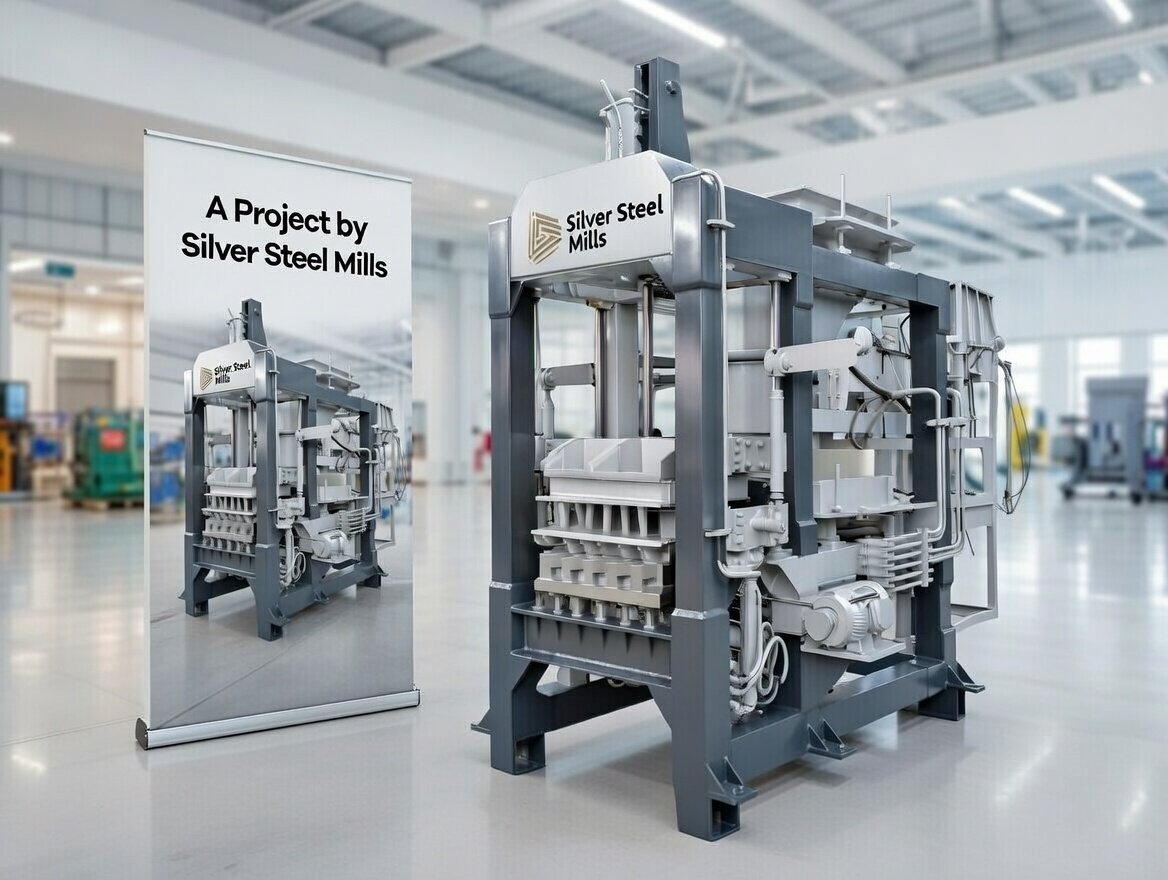
To guarantee this level of safety, commercial dairy investors work with advanced steel fabricators. Corporate farming projects typically commission their structural framing through established engineering firms like Silver Steel Mills, where heavy-duty pre-engineered steel frames, specialized dairy sheds, and structural fabrication components are engineered using automated welding setups to handle intense regional wind loads and corrosive agricultural environments.
Roofing Configurations: Combating Radiant Heat Transfer
The choice of roof cladding is the single most critical factor determining the internal temperature of the dairy shed:
- Single Skin PPGI Sheeting with Insulation: Utilizing pre-painted galvanized iron (PPGI) sheets paired with an under-roof layer of 50mm glass wool or reflective bubble foil is a popular budget choice. While cost-effective, the insulation layers can degrade over time due to birds and moisture damage.
- Polyurethane (PU) Sandwich Panels: This is the premium standard for corporate dairy farming. A 50mm thick injected PU foam core sandwiched between two steel sheets provides a complete thermal barrier. It stops radiant solar heat from entering the shed, keeping the interior significantly cooler and lowering the running costs of mechanical cooling fans.
Industrial Frequently Asked Questions (FAQs)
Q1: What is the current fabrication and erection cost for a commercial steel dairy shed in Pakistan?
Answer: Depending on the steel tonnage per square foot, zinc coating specifications, and roofing choices, the average cost for a high-ventilation structural steel dairy shed ranges from PKR 1,100 to PKR 1,800 per square foot (excluding civil foundations and cow cubicle fittings).
Q2: Why is concrete construction avoided for corporate dairy shed roofs?
Answer: Concrete roofs absorb massive amounts of thermal energy from the sun during the day and continue to radiate that heat downward into the shed throughout the night. Steel structures with proper insulation do not store heat, allowing the shed to cool down immediately as ambient temperatures drop in the evening.
Q3: How do open-sided steel sheds protect animals from cold winter winds?
Answer: During winter, heavy-duty UV-stabilized PVC tarpaulin curtains are installed along the open side spans. These curtains are connected to automated or manual winch systems, allowing operators to roll them up during sunny daytime hours and roll them down at night to block cold winds.
Q4: What thickness of roofing steel sheet is recommended for agricultural sheds?
Answer: A minimum base metal thickness (BMT) of 0.50mm is highly recommended for both roof cladding and wall sections to prevent sagging and to ensure long-term structural integrity against wind and hail damage.
Q5: How many cows can be accommodated in a standard 100×200 foot clear-span steel shed?
Answer: Based on international cow comfort standards providing approximately 100 to 120 square feet of total space per animal (including cubicles, feed alleys, and walking lanes), a 20,000 square foot shed can comfortably house 160 to 180 milking cows.