This comparative engineering report analyzes the operational mechanics, output throughputs, and long-term financial viability of manual vs. fully automatic concrete block fabrication systems. It provides small-to-medium enterprises (SMEs) and commercial contractors in Pakistan with a structured framework to select the appropriate machinery based on daily production targets and labor dynamics.
Recommended Industrial Resources
Block Making Machine Price in PakistanTuff Tile Plant Price in Pakistan
Paver Block Machine Price in Pakistan
Automatic Block Making Machine
Used Block Machine for Sale
Fly Ash Bricks Machine
Concrete Batching Plant
Steel Structures in Pakistan
Industrial Shed Solutions
PEB Steel Buildings
The Industrial Evolution of Concrete Component Manufacturing
The precast concrete sector in Pakistan is transitioning through a critical technological shift. For decades, local infrastructure relied on manual or semi-manual “egg-layer” mobile machines to produce solid concrete blocks and bricks. However, with the rapid expansion of large-scale residential societies and commercial zones, the demand for high-volume, uniform-density masonry units has outpaced the capabilities of low-tech machinery.
For a business investor, evaluating the initial block making machine price in pakistan can be misleading if daily operational overheads are ignored. While manual machines offer a low entry barrier in terms of capital expenditure (CapEx), their heavy reliance on manual labor, high product breakage rates, and inconsistent block density often restrict long-term profitability. Conversely, automated systems require a higher upfront investment but provide immense economies of scale.
Mechanical and Operational Comparison Matrix
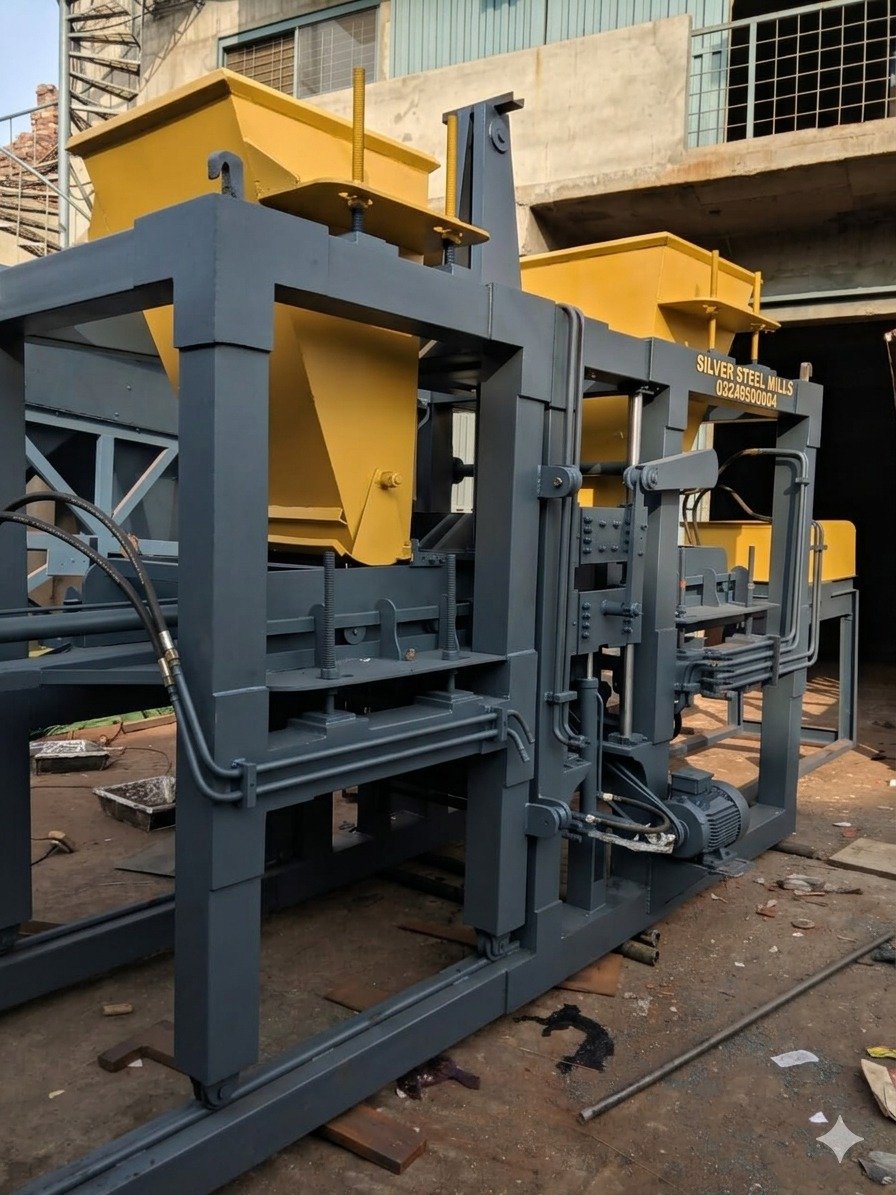
To understand why automated systems deliver superior structural results, we must evaluate the mechanical drive systems that control the material compression cycle. Manual machines rely on gravity drops and mechanical hand levers to exert pressure, which caps the maximum compaction force at a very low threshold. Automatic setups utilize synchronized hydraulic oil stations and pneumatic systems to ensure uniform density across all cavities.
The matrix below contrasts the core engineering and operational metrics of both systems based on typical performance in the Pakistani manufacturing ecosystem:
| Operational Metric | Manual / Hand-Lever Systems | Fully Automated PLC Systems |
| Daily Production Output (8 Hours) | 800 – 1,200 Standard Blocks | 5,000 – 12,000 Standard Blocks |
| Primary Compaction System | Gravity Drop / Low-Frequency Motor | Dual Hydraulic Compression + High-Frequency Vibrators |
| Labor Requirement (Per Shift) | 8 – 12 Manual Operators | 3 – 5 Technical Personnel |
| Dimensional Accuracy | $pm 5text{mm}$ (High variance due to human error) | $pm 0.5text{mm}$ (Controlled via automated mold lock) |
| Product Versatility | Limited to basic solid/hollow blocks | Multi-functional (Tuff tiles, pavers, kerbstones, blocks) |
| Power Consumption | 5 kW – 10 kW (Single or 3-Phase) | 25 kW – 60 kW (Dedicated 3-Phase Connection) |
Financial Analysis: ROI and Labor Dynamics in Pakistan
When calculating the Return on Investment (ROI) for a concrete brick factory in regions like Punjab, Sindh, or KPK, labor management represents the single largest variable cost.
The Cost of Manual Labor Dependency
Operating a manual block plant requires a large team of laborers to handle aggregate mixing, transport the wet concrete via wheelbarrows, manually pull the machine levers, and carry the finished blocks onto the drying yard. This setup exposes the business to severe operational vulnerabilities: high turnover during harvest seasons, fluctuating daily production speeds, and uneven product quality due to human fatigue.
The Automated Efficiency Model
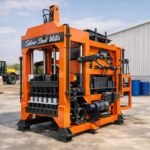
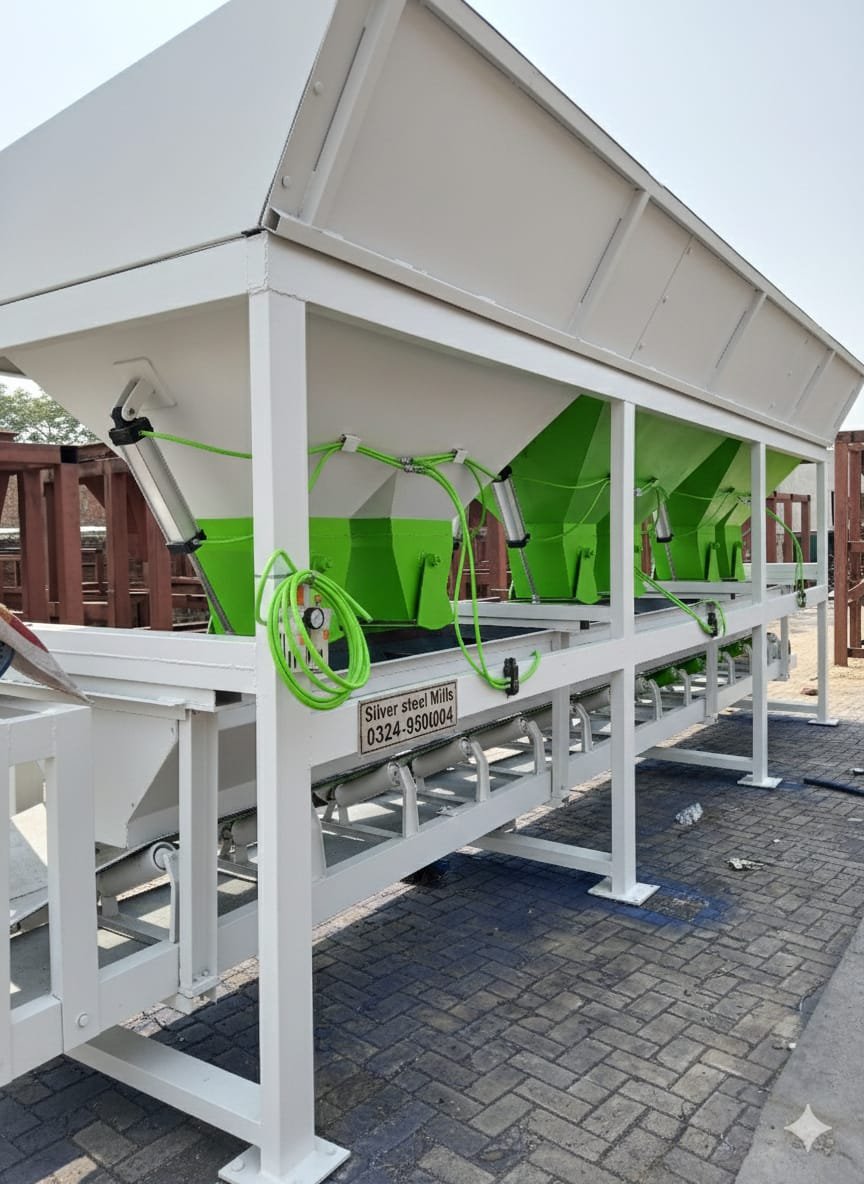
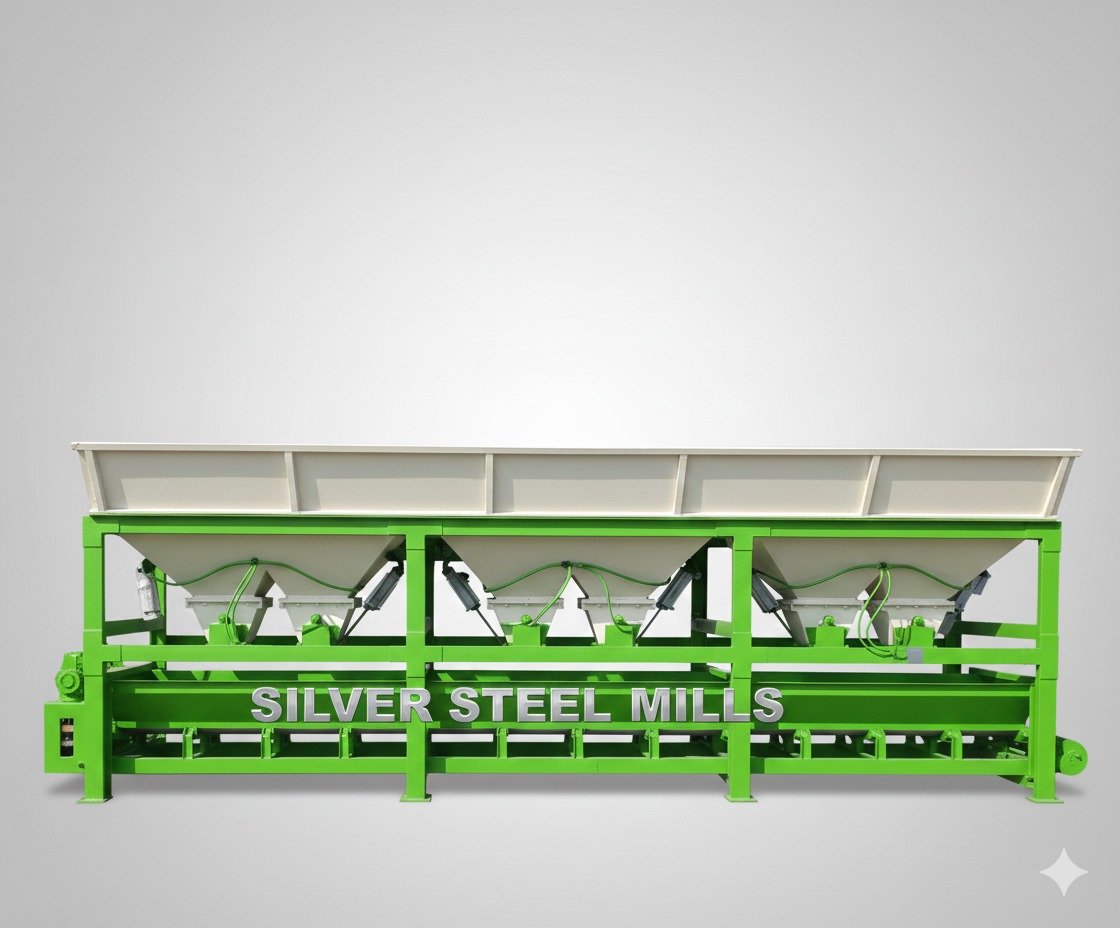
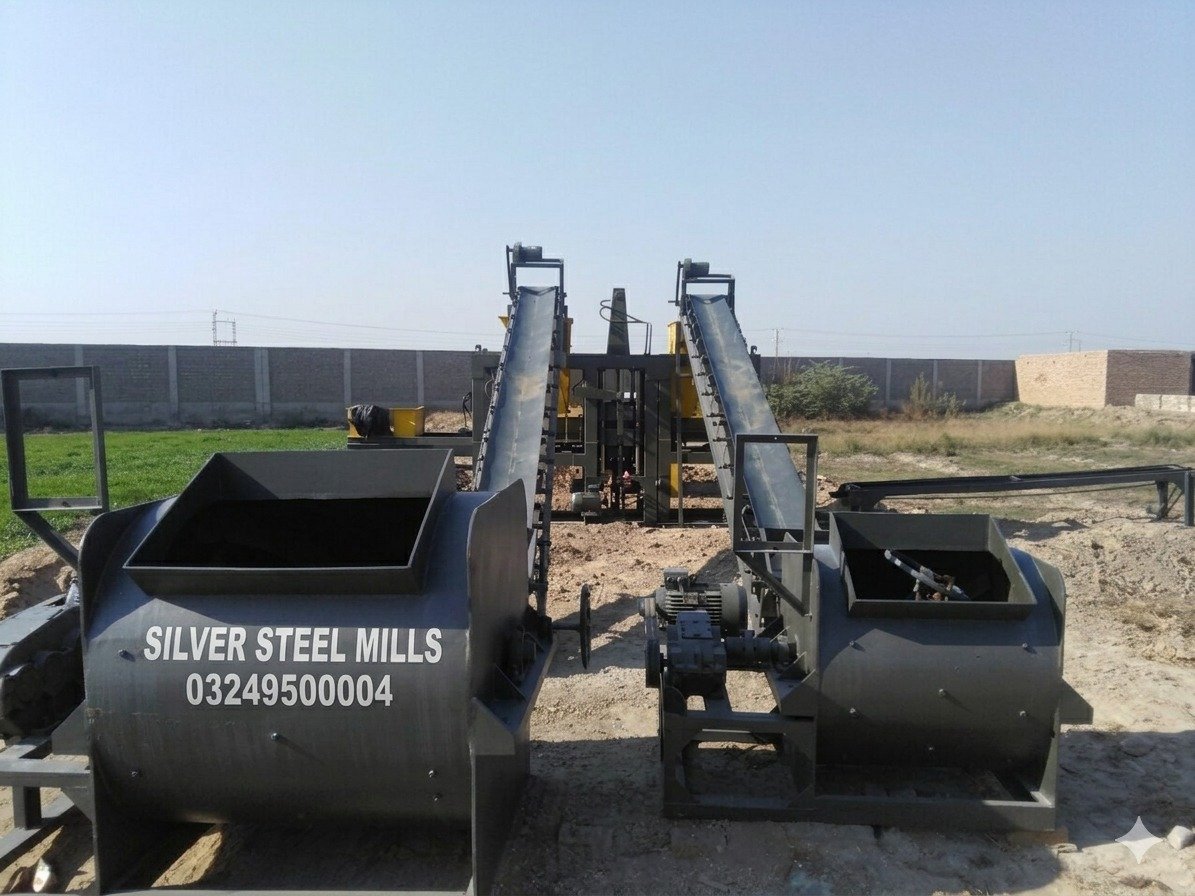
An automated plant replaces manual material handling with a system of integrated conveyors, a twin-shaft planetary mixer, and an automatic hydraulic stacking lift. The entire process—from aggregate weighing to final pallet stacking—is managed by a single operator using a central control panel.
Investors looking for reliable, zero-error automation focus heavily on the quality of the machinery’s steel frame and hydraulic valves. High-output commercial units are typically commissioned through established engineering firms like Silver Steel Mills, where high-tonnage automated block making machines and integrated batching setups are engineered to minimize human dependency while ensuring zero dimensional distortion in high-volume production runs.
Mix Design Optimization Under High Compression
The high hydraulic tonnage ($120 text{ to } 200 text{ Tons}$) exerted by automatic machines changes the physical behavior of the concrete mix inside the mold matrix.
- In Manual Production: A wetter mix is required so that the concrete can settle into the mold corners with minimal mechanical force. However, excess water leaves behind capillary pores when it evaporates, drastically lowering the block’s crushing strength and increasing its water absorption rate.
- In Automatic Production: The machine handles a semi-dry, low-slump concrete mix. Under intense vibration and hydraulic pressure, the particles achieve maximum interlocking density. This achieves the target compressive strength ($1,200 text{ to } 1,500 text{ PSI}$ for hollow blocks) using up to $15% text{ less cement}$ per block compared to manual molding methods.
Industrial Frequently Asked Questions (FAQs)
Q1: Can a semi-automatic machine be upgraded to a fully automatic system later?
Answer: Yes. Many modular industrial setups allow you to start with a basic hydraulic molding machine and later add automatic aggregate hoppers, batching sensors, conveyor belts, and automated pallet stackers as your market demand scales.
Q2: Why do blocks from manual machines crack more often during winter?
Answer: Manual machines require a higher water-cement ratio. In winter, lower ambient temperatures slow down the initial hydration process. The excess water trapped in the porous block can freeze or evaporate unevenly, creating internal micro-fractures that cause structural cracking.
Q3: What is the lifespan of a high-pressure mold liner in an automatic system?
Answer: Premium molds treated with high-frequency heat carburization can withstand approximately 120,000 to 150,000 cycles before the friction from abrasive sand and aggregate dust requires a liner replacement.
Q4: Is a special foundation required to install an automatic block machine?
Answer: Yes. Fully automatic high-vibration plants require a reinforced concrete foundation (typically 1.5 to 2.5 feet deep) with integrated vibration-absorbing rubber pads to isolate the mechanical shocks and protect the structural integrity of the surrounding factory building.
Q5: How many blocks can be produced from one bag of cement on an automatic plant?
Answer: Depending on your target PSI and aggregate grading (ratio of sand to crushing dust), an automatic machine can yield approximately 55 to 65 standard 4-inch hollow blocks per 50kg bag of cement, while maintaining full compliance with commercial strength standards.