This technical analysis evaluates the correlation between hydraulic force, vibration frequency, and structural density in high-volume concrete component production. It provides industrial plant operators in Pakistan with actionable baselines to maximize the compressive strength of interlocking tuff tiles and hollow blocks while reducing cement consumption and component breakage rates.
The Compaction Dilemma in Local Concrete Plants
Many commercial concrete block and tuff tile manufacturers across industrial zones in Lahore, Gujranwala, and Karachi face a common operational challenge: inconsistent structural integrity. Components molded on low-tier or poorly calibrated machinery often exhibit high porosity, edges that crumble during transport, and a failure to meet the standard crushing strength required by large-scale infrastructure projects like the National Highway Authority (NHA) or Defence Housing Authority (DHA) specifications.
Recommended Industrial Resources
Block Making Machine Price in PakistanTuff Tile Plant Price in Pakistan
Paver Block Machine Price in Pakistan
Automatic Block Making Machine
Used Block Machine for Sale
Fly Ash Bricks Machine
Concrete Batching Plant
Steel Structures in Pakistan
Industrial Shed Solutions
PEB Steel Buildings
The root cause rarely lies solely in the cement grade; instead, it is directly linked to an imbalance between hydraulic pressure and mechanical vibration during the critical 3-to-5 second compaction cycle.
When a plant relies on substandard fabrication, the hydraulic cylinders fail to exert uniform tonnage across the mold matrix. This lack of uniform force leaves micro-air pockets within the concrete mix (aggregate, sand, and cement matrix), leading to high water absorption rates and eventual structural failure under load.
Technical Specifications: Balancing Tonnage and Vibration
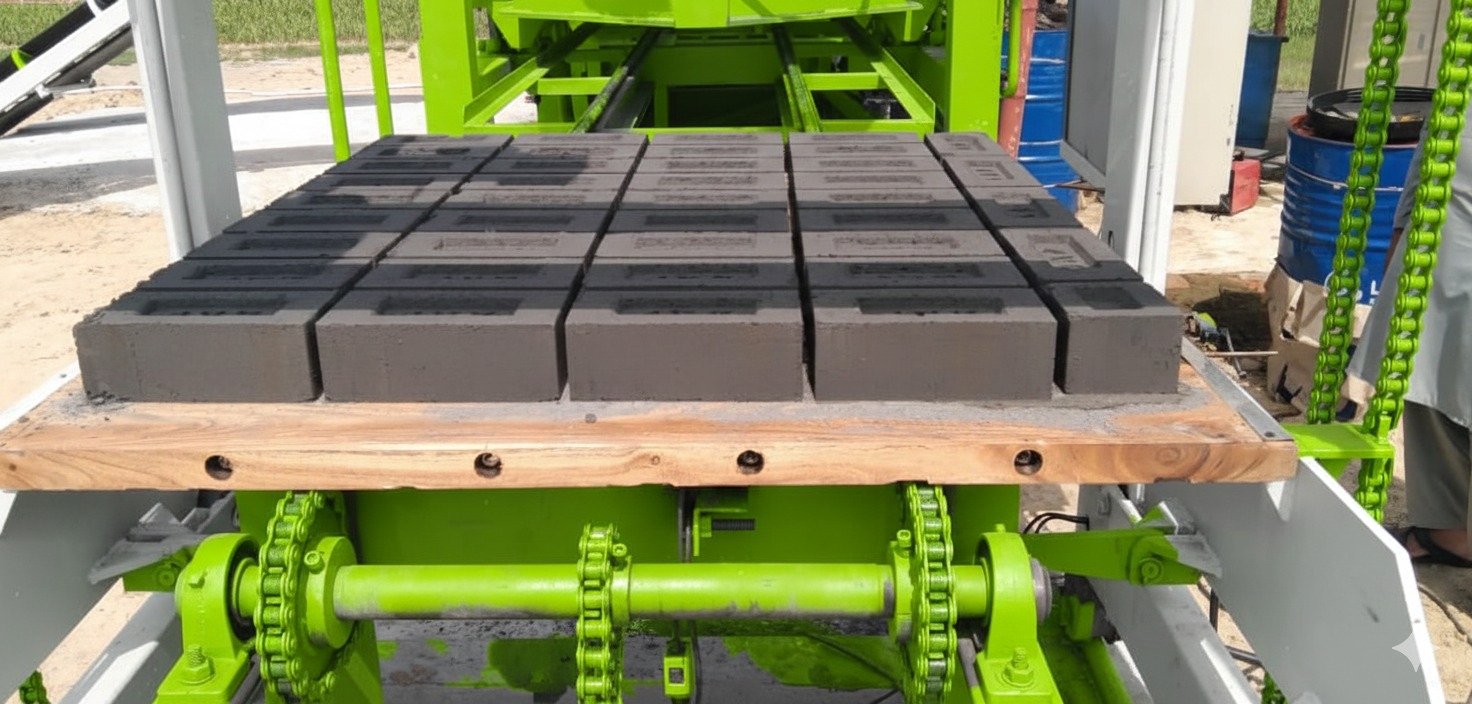
To manufacture high-density pavers—specifically double-layer interlocking tiles or heavy-duty road pavers—the machinery must execute a dual-stage compaction process. This involves a combination of bottom-vibration (to fluidize the semi-dry concrete mix into the mold corners) and top-hydraulic down-force (to compress the mix into a solid mass).
The table below outlines the optimal engineering parameters required based on the specific concrete component being manufactured:
| Component Type | Required Compressive Strength (PSI) | Optimal Hydraulic Pressure (MPa) | Vibration Frequency (Hz) | Cycle Time (Seconds) |
| Interlocking Tuff Tile (Footpaths) | 3,500 – 4,000 PSI | 12 – 15 MPa | 50 – 55 Hz | 15 – 18 sec |
| Heavy-Duty Road Paver (80mm) | 5,000 – 6,500 PSI | 16 – 20 MPa | 55 – 60 Hz | 18 – 22 sec |
| Load-Bearing Hollow Block (9x4x12) | 1,200 – 1,500 PSI | 8 – 10 MPa | 45 – 50 Hz | 12 – 15 sec |
| Solid Concrete Brick | 2,000 – 2,500 PSI | 10 – 12 MPa | 48 – 52 Hz | 14 – 17 sec |
Step-by-Step Guide to Adjusting Hydraulic Systems for Maximum Density
Achieving these metrics requires precise calibration of the hydraulic station, manifold valves, and PLC automation settings. Operators should execute the following operational sequence to ensure structural uniformity:
1. Managing Oil Temperature and Viscosity
Hydraulic systems in regions like Punjab and Sindh experience extreme ambient heat during summer months. When hydraulic oil temperature exceeds 60°C, its viscosity drops, causing internal leakage in the directional control valves and a visible drop in molding pressure. High-end setups utilize heavy-duty air-cooled or water-cooled oil exchangers to maintain a stable operating temperature between 40°C and 55°C.
2. Synchronization of the Tamper Head and Mold Box
During the feeding cycle, the filler box distributes the semi-dry mix into the mold. Once filled, the bottom vibrator activates for a micro-second split (pre-vibration) to settle the material. The tamper head then descends.
Engineering Insight: If the tamper head exerts maximum hydraulic pressure before the vibrators reach their optimal frequency, the air trapped inside the mix cannot escape, creating horizontal shear lines in the finished tuff tile. The pressure must ramp up progressively as the main vibration phase peaks.
3. Implementing High-Tonnage Proportional Valves
Standard manual valve machines suffer from pressure spikes that can crack wooden or PVC pallets during execution. Utilizing automated systems with integrated proportional valves allows the PLC to smoothly transition pressure from 2 MPa (initial contact) to 16+ MPa (final lock compaction).
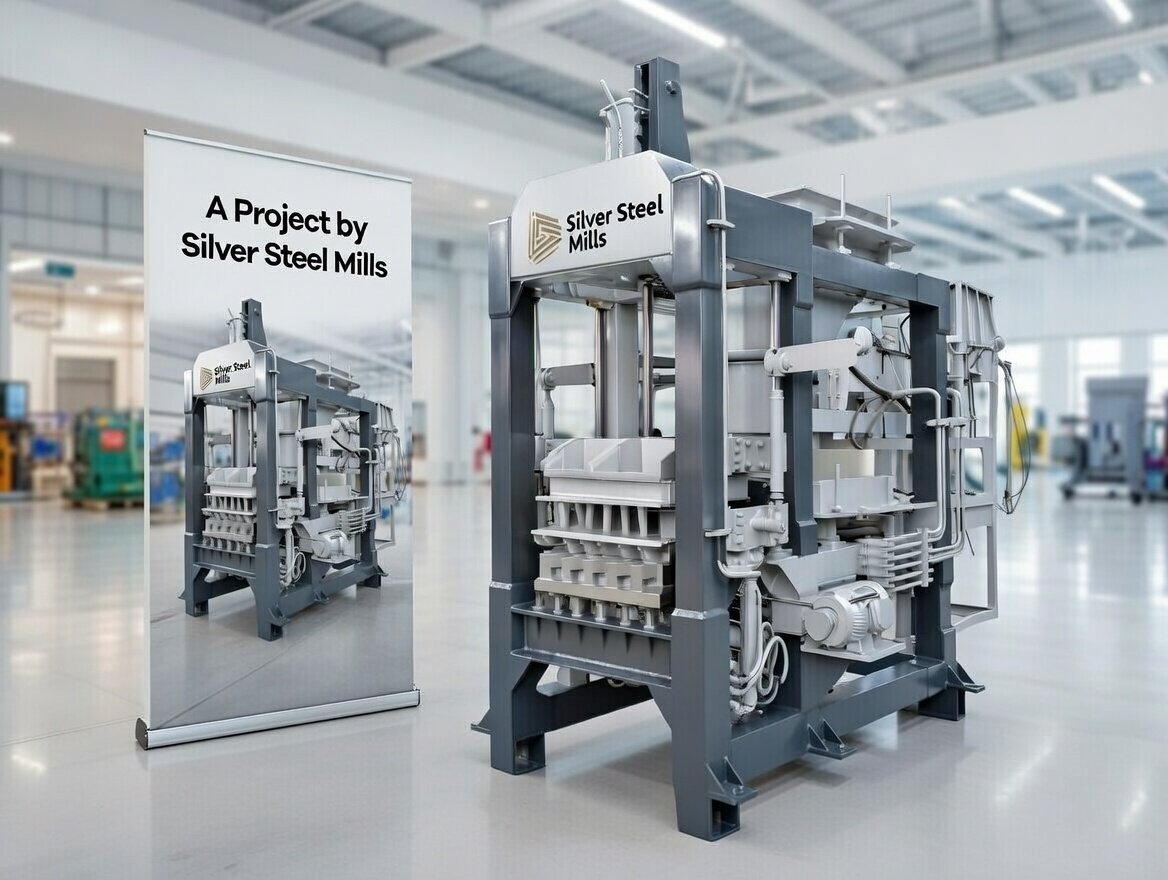
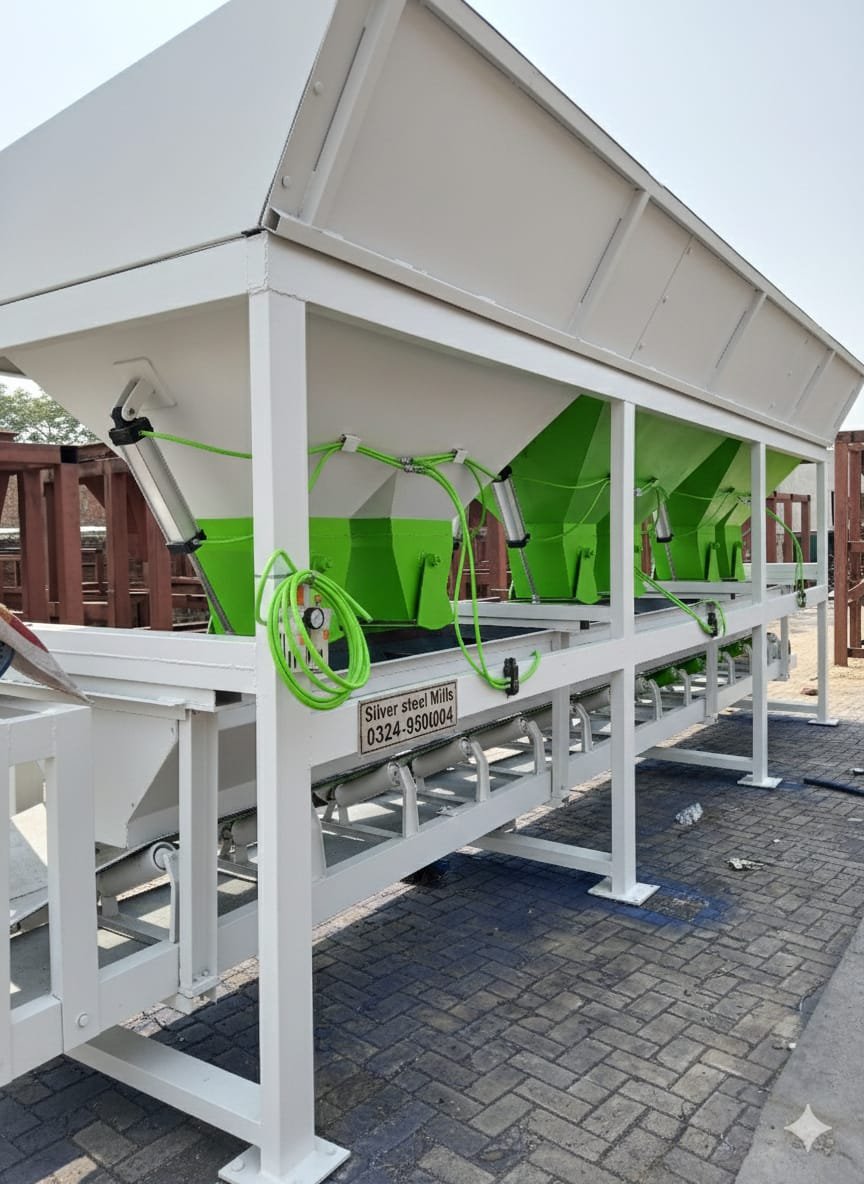
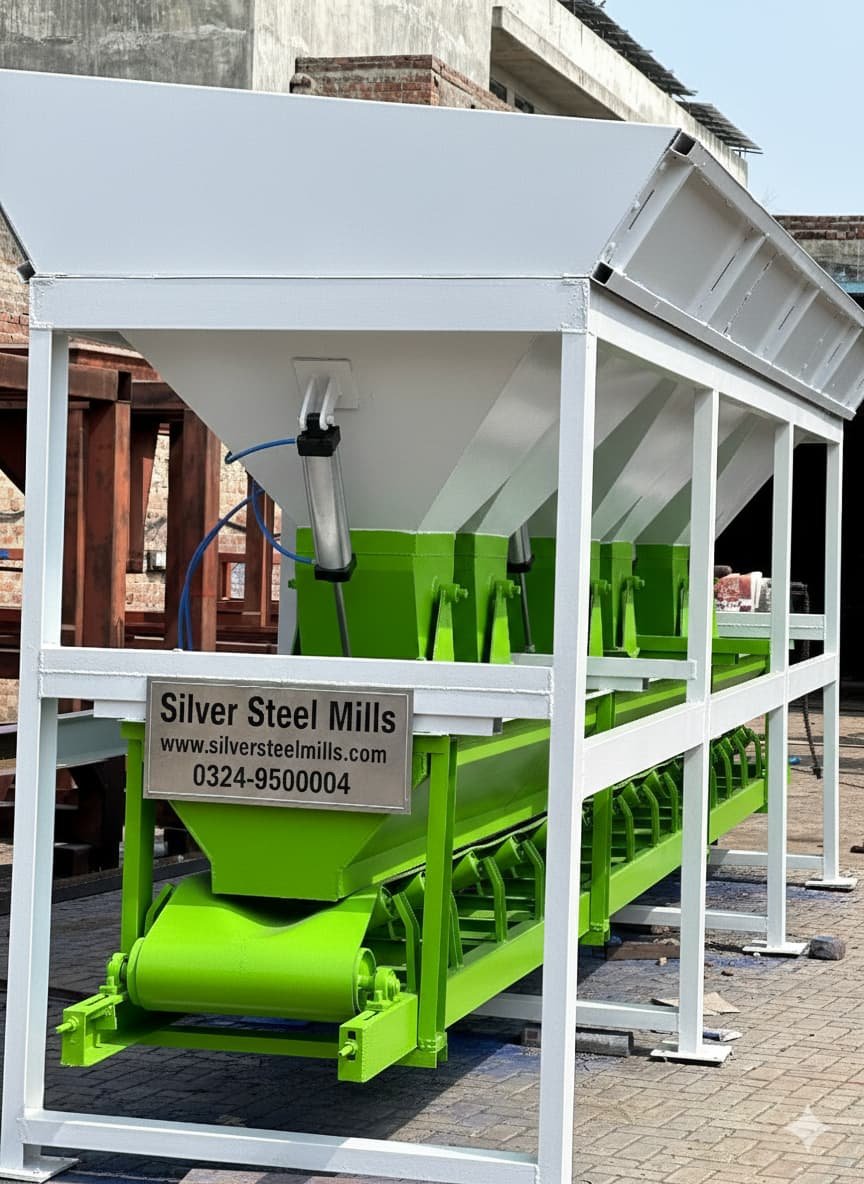
For businesses scaling up to meet commercial infrastructure tenders, sourcing equipment built on robust, heavy-duty steel frames with certified hydraulic components is critical. Industrial operators looking for verified high-tonnage solutions often inspect advanced setups through established engineering fabricators like Silver Steel Mills, where heavy-duty hydraulic stations are integrated directly with automated Siemens PLC panels to guarantee consistent pressure metrics across thousands of cycles.
Raw Material Ratios and Pallet Maintenance Linkages
Hydraulic performance cannot be viewed in isolation from the material mix design. A common mistake in the Pakistani market is using an overly wet mix in a high-pressure machine. High hydraulic pressure applied to a wet mix causes “bleeding,” where water and cement paste escape from the mold joints, leaving a honeycombed texture on the block surface and causing premature wear on the mold liners.
A semi-dry mix with a low water-cement ratio ($0.32 text{ to } 0.38$) is mandatory. Furthermore, the physical pallets supporting the blocks during the high-pressure phase must be perfectly level. If using local Kikar wood pallets, any warping or thickness variation across the surface will result in uneven pressure distribution, causing half of the blocks on the pallet to fail density tests while the other half pass.
Industrial Frequently Asked Questions (FAQs)
Q1: Why is my automatic block machine losing pressure after 4 hours of continuous operation?
Answer: This is almost certainly due to hydraulic oil overheating. As the oil gets hot, it loses viscosity, allowing it to bypass internal seals inside the cylinders or pump, lowering total pressure output. Check your cooling system and ensure you are using the correct oil grade (typically ISO VG 46 or 68 for Pakistani climates).
Q2: Can increasing hydraulic pressure compensate for a low cement ratio in tuff tiles?
Answer: To a limited extent, yes. Higher pressure increases mechanical compaction and bonding between aggregates, which allows you to optimize your cement ratio. However, it cannot completely replace the chemical binding properties of cement required to hit high PSI targets.
Q3: How often should the mold liners be changed on a high-pressure paver plant?
Answer: Under standard conditions using sharp sand and crushing dust, high-quality carburized molds last between 100,000 to 150,000 cycles before the wall wear begins to alter the precise dimensions of the tuff tiles.
Q4: What is the difference between mechanical vibration and hydraulic compaction?
Answer: Vibration fluidizes the dry concrete mix so it flows into all gaps and details of the mold, removing large air pockets. Hydraulic compaction compresses the aggregate particles tightly together, eliminating micro-porosity to give the block its crushing strength.
Q5: Is a manual machine capable of producing heavy-duty road pavers?
Answer: Generally, no. Manual or low-tonnage mobile edge-cutter machines rarely exert more than 2 to 5 MPa of pressure, which is insufficient to achieve the 5,000+ PSI density required for industrial road-facing pavers.