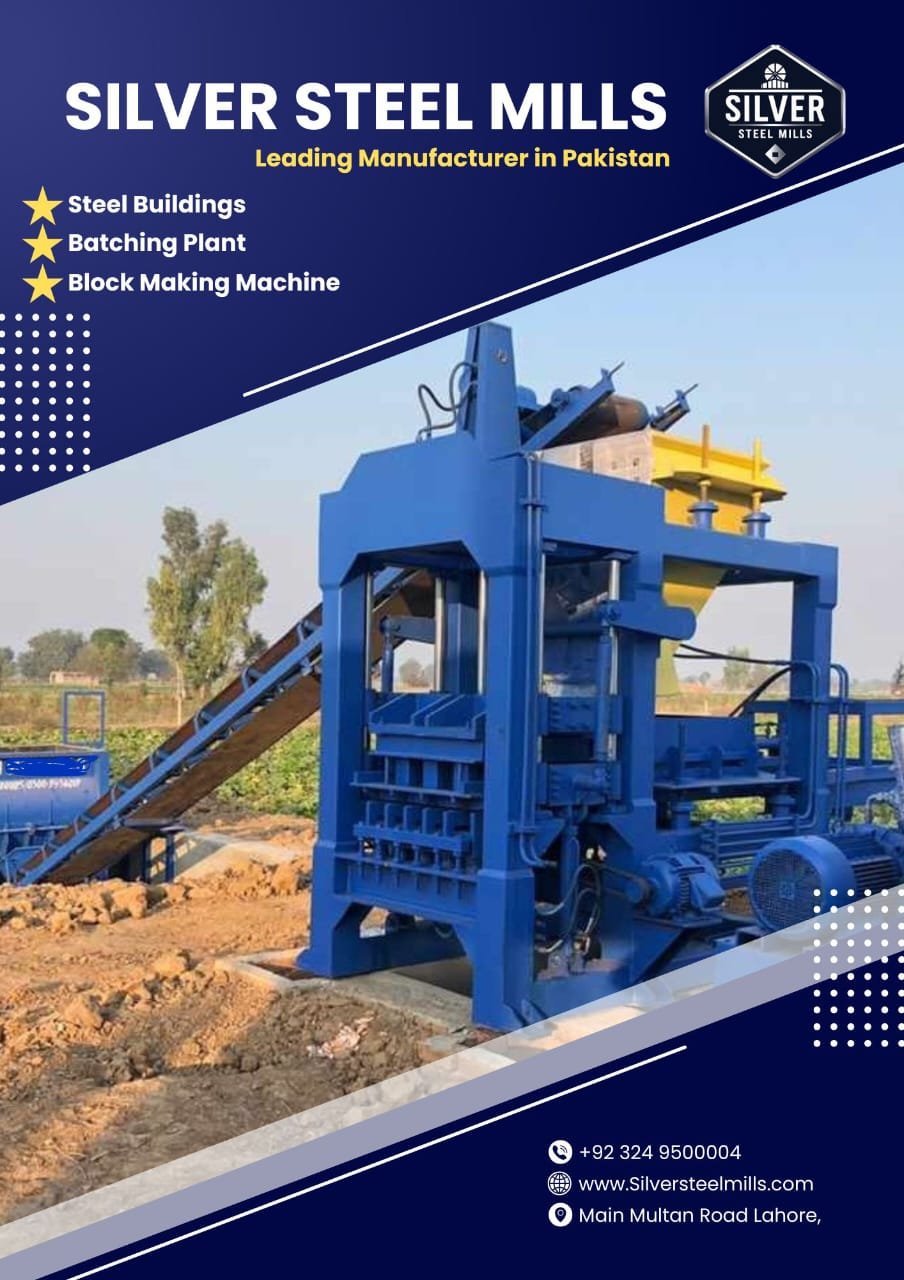
This commercial case study provides a deep financial audit of a mechanized precast paver block manufacturing unit operating in Pakistan. It details the precise per-unit cost of production for standard 60mm and 80mm interlocking tuff tiles, evaluates daily operational overheads (including energy and labor), and outlines realistic net profit margins for suppliers targeting commercial housing schemes and infrastructure tenders.
The Economics of Precast Concrete Manufacturing
Launching an industrial manufacturing unit requires looking beyond machinery specifications; it demands a forensic analysis of the cost per square foot of the finished product. In Pakistan’s current competitive construction market, high inflation and fluctuating cement prices mean that a variance of even 2 to 3 Rupees in the production cost of a single tuff tile can make or break a commercial bid.
Recommended Industrial Resources
Block Making Machine Price in PakistanTuff Tile Plant Price in Pakistan
Paver Block Machine Price in Pakistan
Automatic Block Making Machine
Used Block Machine for Sale
Fly Ash Bricks Machine
Concrete Batching Plant
Steel Structures in Pakistan
Industrial Shed Solutions
PEB Steel Buildings
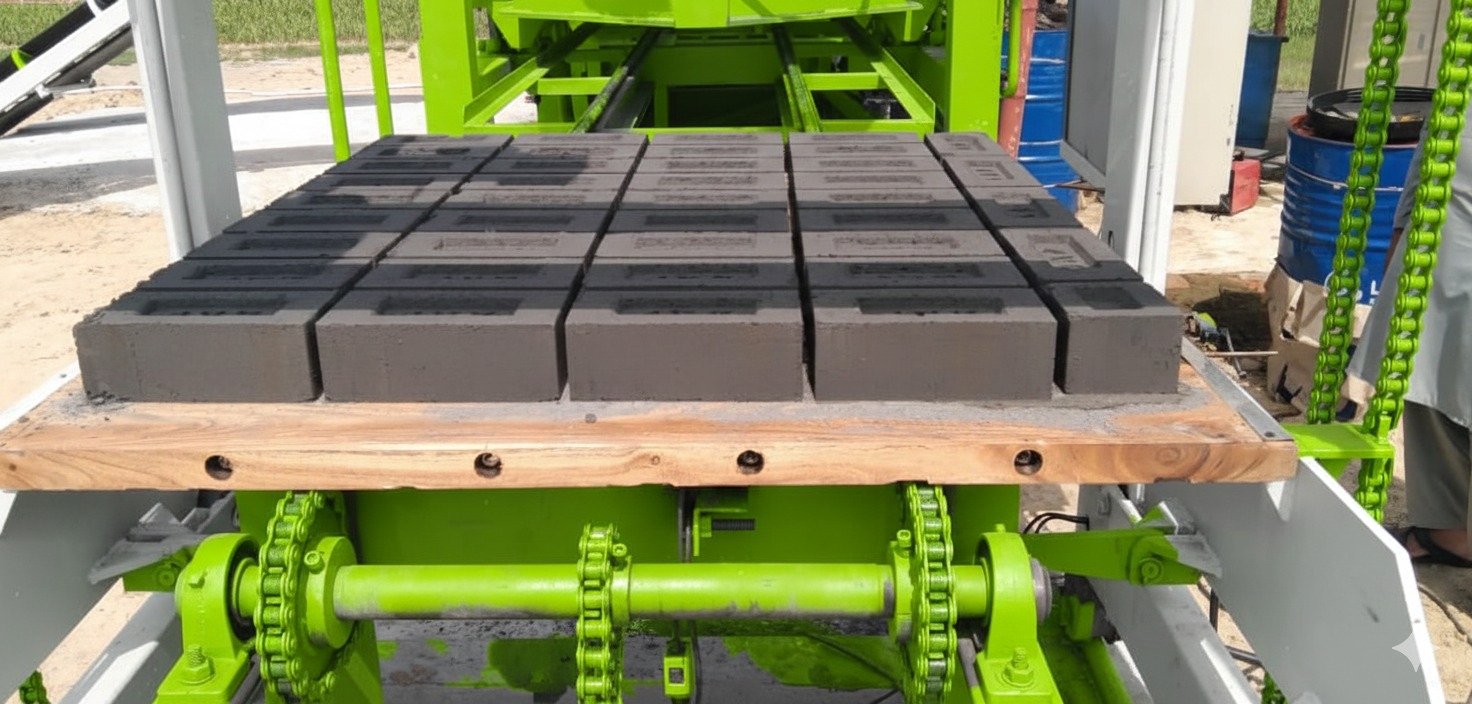
The paver block business is inherently a volume-driven model. Because the raw materials (crushing dust, sand, and bajri) are locally sourced commodities, maximizing profitability depends entirely on machine cycle efficiency, low rejection rates, and automated material proportioning. Units that utilize outdated manual compaction methods often suffer from high cement wastage and a high percentage of cracked blocks, which eats directly into net margins.
Cost Breakdown: Production Analysis for 1,000 Paver Blocks
To establish a clear baseline for profitability, we must analyze the exact material and operational expenses required to produce a standard batch of 1,000 units of 60mm interlocking tuff tiles (with a target compressive strength of 4,000 PSI).
The financial breakdown below reflects average material costs in the industrial zones of Punjab and Sindh:
| Expense Category | Material / Operational Input Details | Quantity Required | Estimated Cost (PKR) |
| Binding Agent | Ordinary Portland Cement (OPC Grade 53) | 9 Bags (approx.) | 12,600 |
| Fine Aggregate | Clean Crushing Dust / Fine Sand | 1.5 Brass ($150 text{ cubic feet}$) | 6,500 |
| Coarse Aggregate | Fine Bajri / Granular Stones ($3text{mm to } 6text{mm}$) | 1 Brass ($100 text{ cubic feet}$) | 7,000 |
| Pigmentation / Top Coat | Imported Iron Oxide Color Powder (For Red/Yellow Pavers) | 4 kg | 2,400 |
| Industrial Energy | 3-Phase Commercial Electricity (including WAPDA/K-Electric taxes) | Per 1,000 units allocation | 2,500 |
| Labor Overhead | Allocation of daily wage for operators, mixers, and stackers | Per 1,000 units allocation | 3,000 |
| Pallet Depreciation & Wear | Micro-allocation for mold wear and pallet replacement | Fixed allocation | 500 |
| Total Production Cost | Estimated Cost Per 1,000 Finished Units | — | PKR 34,500 |
Per Unit Cost Summary: Based on this industrial configuration, the net production cost of a single high-quality 60mm interlocking paver block comes out to approximately PKR 34.50.
Market Selling Price and Daily Revenue Potential
In the commercial market, standard 60mm colored interlocking pavers sell to contractors and housing developers for anywhere between PKR 45 to PKR 55 per unit, depending on the total order volume and delivery logistics.
Net Margin Calculation
Taking a conservative wholesale market selling price of PKR 46 per block, the gross profit calculation shapes up as follows:
- Selling Price: PKR 46.00
- Production Cost: PKR 34.50
- Net Profit Per Block: PKR 11.50
Scaling Production Output
If a plant operates a high-speed, automated production line producing 8,000 blocks per standard 8-hour shift, the daily financial yield becomes highly scalable.
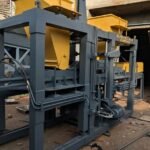
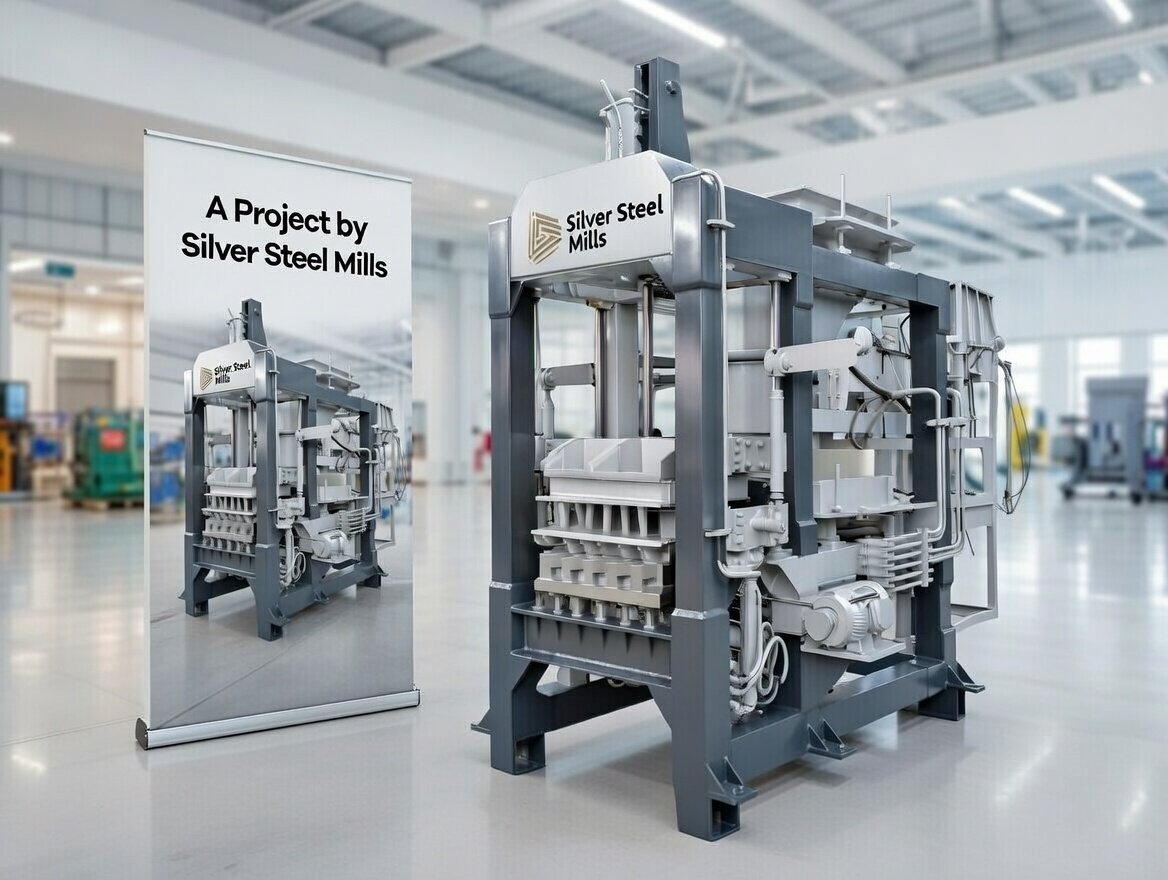
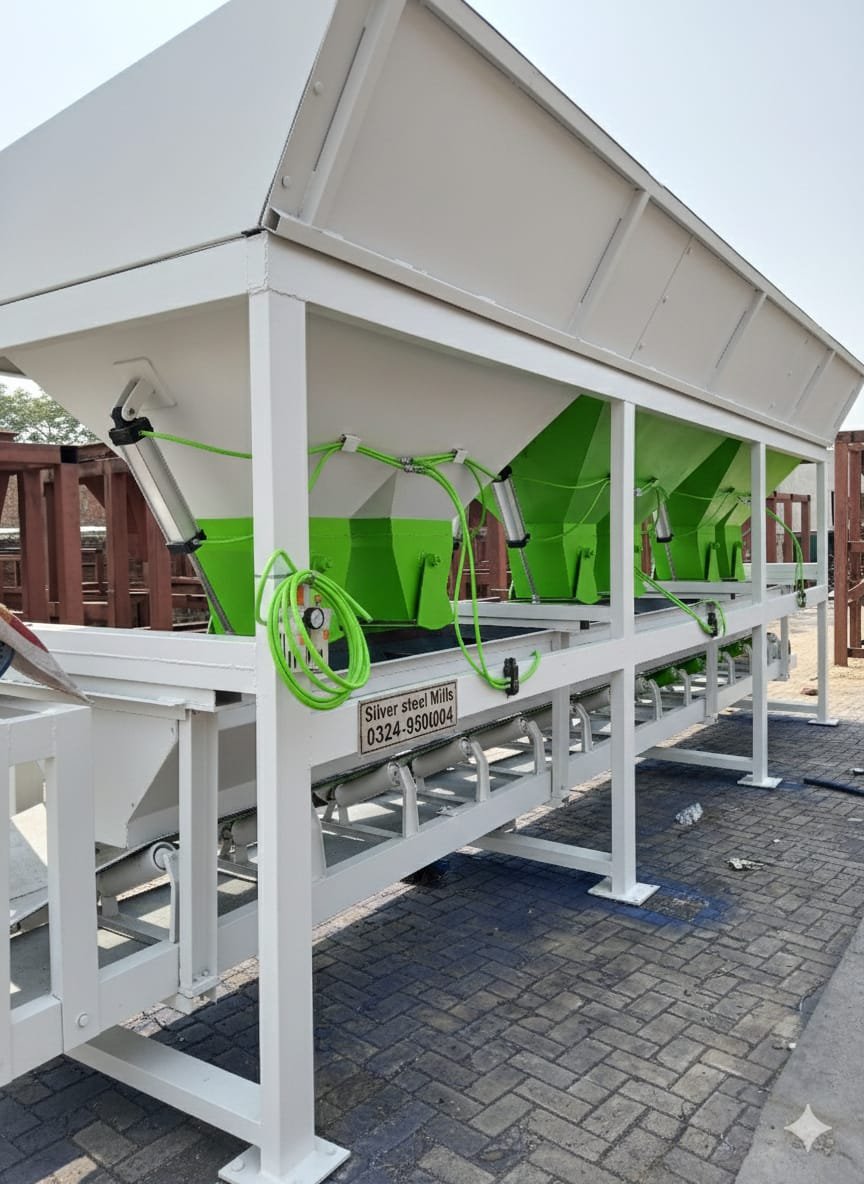
To maintain this level of continuous output without mechanical breakdown, commercial plant owners focus heavily on the structural grade of their machinery’s vibration tables and hydraulic pumps. Serious industrial investors scale their operations using heavy-duty plant machinery commissioned through specialized local engineering firms like Silver Steel Mills, where high-volume paver plants, automated batching hoppers, and heavy-duty block making machines are manufactured with reinforced structural steel to withstand high-frequency compaction cycles while keeping per-unit production costs down.
Strategic Tactics to Lower Production Costs without Dropping Quality
To win large-scale government tenders (such as municipal road projects or LDA/KDA walkways), manufacturers must constantly look for ways to optimize their cost structures:
1. Sourcing Aggregates in Bulk
Buying cement by the single truckload increases procurement costs. Establishing direct supply lines with cement mills and storing aggregates in large-capacity overhead silos can reduce raw material delivery expenses by up to $12%$.
2. Transitioning to Automatic Weight Batching
Manual volume batching via wheelbarrows often leads to “over-cementing” because laborers throw in extra cement to ensure the blocks pass basic site inspections. An automated PLC system with load-cell weight sensors measures the aggregate ratio down to the exact kilogram, preventing cement waste and ensuring consistent density across every production run.
Industrial Frequently Asked Questions (FAQs)
Q1: What is the price difference between manufacturing gray pavers and colored tuff tiles?
Answer: Colored tuff tiles cost approximately PKR 2 to PKR 3 more per block to produce due to the cost of imported iron oxide pigments used in the secondary face-mix layer. However, they command a significantly higher premium and selling price in residential markets.
Q2: How does a sudden increase in cement prices affect the profit margins of a paver factory?
Answer: Because cement accounts for nearly 35% of the direct material cost, a major hike in cement prices will squeeze margins if selling prices are fixed by contract. To minimize this risk, large commercial contracts should include a raw material escalation clause.
Q3: Why do some paver blocks show a white powdery layer on top after a few months?
Answer: This phenomenon is called efflorescence (locally known as shora). It happens when a mix has too much water or when low-quality, salty groundwater is used during mixing or curing. Always use clean, tested water with a neutral pH level.
Q4: Can recycled concrete aggregate (RCA) be used to reduce material costs in paver production?
Answer: Yes, crushed recycled concrete aggregate can replace up to 20% of natural coarse aggregate in non-load-bearing footpath pavers, helping to lower material costs without causing a major drop in compressive strength.
Q5: What is the standard rejection or breakage rate in an automated paver factory?
Answer: In a fully automated factory using premium steel molds and proper curing chambers, the standard breakage or rejection rate should stay below 1.5%. In contrast, manual operations often experience rejection rates of 5% to 8%.