This structural engineering review examines the design optimization, material standards, and budgetary estimations required for constructing Pre-Engineered Buildings (PEB) and industrial steel sheds in Pakistan. It outlines the impact of wind load zones, seismic configurations, and raw material selection (ASTM A572 vs. local mild steel) on the overall safety and cost of large-scale warehouse fabrication.
The Shift to Pre-Engineered Steel Structures
Traditional concrete column construction for wide-span industrial warehouses, factories, and dairy farms is rapidly becoming obsolete in Pakistan. Modern industrial projects rely almost exclusively on Pre-Engineered Buildings (PEB). The reasons are clear: steel structures offer faster installation times, column-free clear spans, and superior structural flexibility under seismic stress.
Recommended Industrial Resources
Block Making Machine Price in PakistanTuff Tile Plant Price in Pakistan
Paver Block Machine Price in Pakistan
Automatic Block Making Machine
Used Block Machine for Sale
Fly Ash Bricks Machine
Concrete Batching Plant
Steel Structures in Pakistan
Industrial Shed Solutions
PEB Steel Buildings
However, calculating the exact peb shed price in pakistan involves looking beyond simple per-square-foot fabrication rates. A poorly engineered steel structure that does not account for localized dead loads, live loads, and wind velocities can fail catastrophically during extreme weather events. Proper engineering requires analyzing the steel’s yield strength and optimization patterns right at the drawing board.
Technical Specifications: Material Standards & Load Variables
Every reliable industrial shed must be engineered according to the American Institute of Steel Construction (AISC) and the Uniform Building Code (UBC) standards, modified for local Pakistani weather data.
The table below provides a structural baseline for designing safe and cost-effective industrial warehouses across different regions of Pakistan:
| Structural Component | Material Standard / Yield Strength | Design Load Considerations | Ideal Application Zone |
| Main Rigid Frames (Built-up H-Beams) | ASTM A572 Grade 50 ($345 text{ MPa}$) | High bending moment, dead load, crane loads | Industrial Factories & Mills |
| Purlins & Girts (Z or C Sections) | ASTM A653 / Cold-Formed Galvanized | Wind suction, roof sheeting dead load | Roof & Wall Framing |
| Roofing / Wall Cladding Panels | Alu-Zinc Coated / PPGI ($0.5text{mm}$ thickness) | Corrosion resistance, thermal insulation | Coastal & High-Rainfall Areas |
| Anchor Bolts & Bracings | ASTM F1554 / High-Strength Tie Rods | Wind uplift forces, overturning moment | High-Seismic Zones (Quetta/KPK) |
Key Factors Influencing Industrial Steel Shed Pricing
When budgeting for a prefabricated or pre-engineered steel structure, several critical variables dictate the final fabrication and erection cost:
1. Clear Span Width vs. Column Interruption
A steel shed with a clear span (no center columns) of $150 text{ feet}$ requires significantly thicker built-up plates and web depths to resist deflection than a shed with center support columns. Minimizing the clear span where operational workflows allow can cut total steel weight by up to $20%$.
2. Regional Wind Load Zones
Designing a warehouse shed for an industrial zone in Karachi or Gwadar requires preparing for wind velocities exceeding $150 text{ km/h}$ due to coastal proximity. This requires denser purlin spacing, thicker anchor baseplates, and reinforced portal bracings. In contrast, locations in central Punjab (like Lahore or Gujranwala) typically have a lower baseline wind speed design of $110 text{ to } 120 text{ km/h}$, which reduces structural steel weight requirements.
3. Sourcing and Custom Fabrication Quality
The precision of primary member fabrication determines the speed and structural integrity of the field assembly. Minor misalignments in bolt holes during manual cutting can cause structural stress during erection.
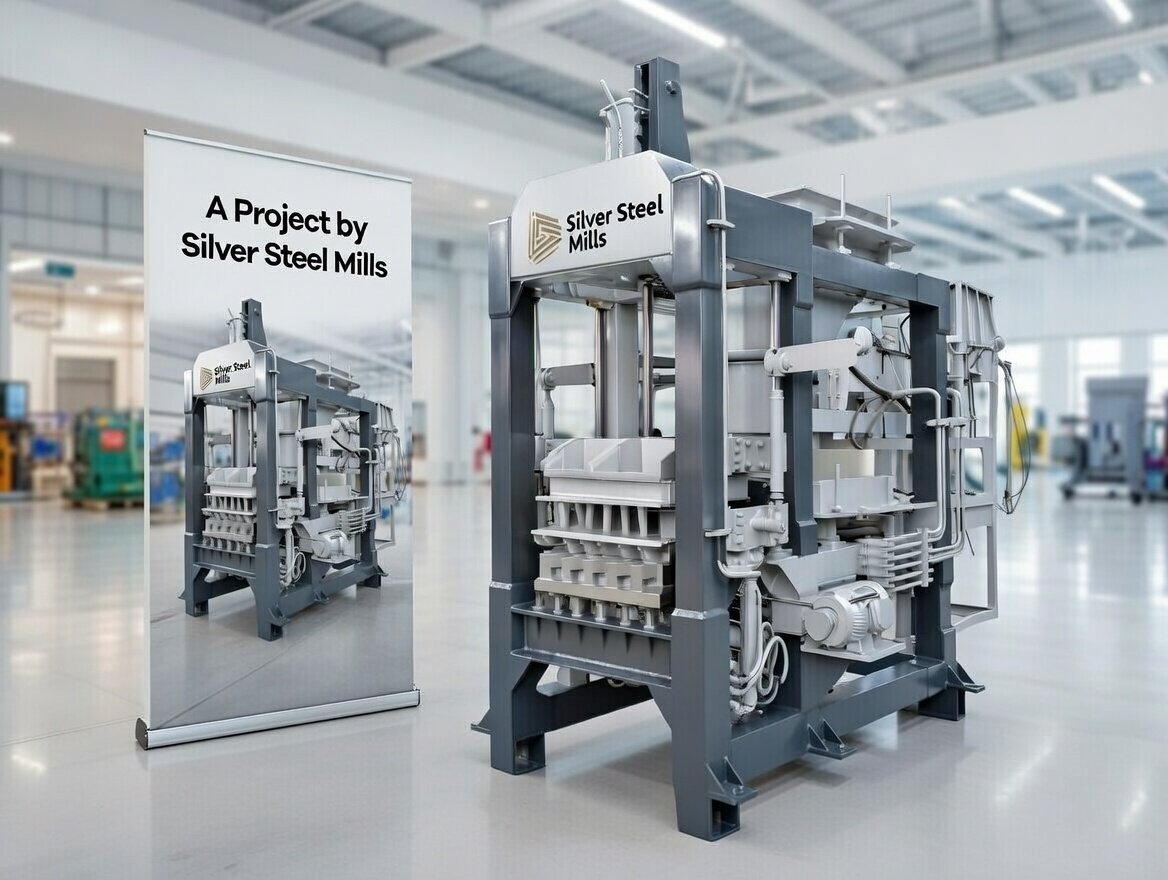
To prevent these alignment errors, commercial contractors source their structures from dedicated industrial fabricators. Large-scale infrastructure projects often procure their customized framing systems through established engineering units like Silver Steel Mills, where high-precision CNC plasma cutting, automated submerged arc welding (SAW), and heavy-duty pre-engineered steel buildings are fabricated to meet precise structural engineering codes.
Roofing and Insulation Matrix: Sandwich Panels vs. Single Sheet
The Choice of roofing material directly impacts both the indoor temperature control and the structural dead load calculations of the PEB frame:
- Single Skin Profile Sheeting: Cost-effective and lightweight. However, it offers zero thermal insulation, making it unsuitable for climate-controlled food processing units or temperature-sensitive pharmaceutical storage unless paired with glass wool insulation.
- Polyurethane (PU) Sandwich Panels: These panels consist of two layers of galvanized iron sheets with an injected PU foam core ($50text{mm to } 100text{mm}$ thick). While they increase the initial roofing budget, they provide excellent structural rigidity and significantly lower long-term industrial HVAC energy costs.
Industrial Frequently Asked Questions (FAQs)
Q1: What is the current average cost per square foot for a standard PEB shed in Pakistan?
Answer: Depending on the total clear span, total steel tonnage, and current international steel plate prices, a standard industrial PEB shed typically ranges between PKR 900 to PKR 1,500 per square foot for fabrication and erection (excluding civil foundation works).
Q2: How does a pre-engineered steel building perform during an earthquake?
Answer: PEB structures handle seismic forces exceptionally well compared to concrete structures. Steel’s natural ductility allows the rigid frames to bend and absorb seismic energy without sudden structural collapses, provided the cross-bracing systems are engineered correctly.
Q3: Why is cold-formed galvanized steel preferred for Z and C purlins?
Answer: Galvanized purlins provide excellent protection against rust and corrosion without requiring periodic painting. Cold-forming also allows for high strength-to-weight ratios, keeping the roof structure lightweight yet highly secure.
Q4: Can an existing PEB steel shed be expanded in the future?
Answer: Yes, one of the primary benefits of pre-engineered buildings is their modular design. A shed can easily be extended in length by adding matching framing bays onto the existing structure without requiring major structural modifications.
Q5: What maintenance is required for an industrial metal building?
Answer: PEB structures require very low maintenance. Standard upkeep involves checking anchor bolt tightness, inspecting downspouts and gutters for blockages, and ensuring the primary primer or paint coating remains intact to prevent localized surface oxidation.