This industrial evaluation breaks down the financial and operational blueprints required to establish a commercial-grade tuff tile and paver block manufacturing unit in Pakistan. It details capital expenditure (CapEx), raw material procurement strategies, land layout optimization, and ROI metrics for regional investors targeting private and government infrastructure contracts.
The Rising Demand for Precast Pavers in Urban Infrastructure
The construction landscape in Pakistan is witnessing a permanent shift from traditional asphalt roads and clay brick walkways to high-strength precast concrete pavers. From housing societies in Lahore and Islamabad to industrial commercial yards in Karachi, interlocking tuff tiles have become the standard due to their durability, aesthetic variety, and low maintenance costs.
Recommended Industrial Resources
Block Making Machine Price in PakistanTuff Tile Plant Price in Pakistan
Paver Block Machine Price in Pakistan
Automatic Block Making Machine
Used Block Machine for Sale
Fly Ash Bricks Machine
Concrete Batching Plant
Steel Structures in Pakistan
Industrial Shed Solutions
PEB Steel Buildings
For new investors, entering the concrete products market offers a highly lucrative opportunity. However, launching a plant without calculating the exact operational bottlenecks—such as aggregate grading, moisture control, and machine output capacities—leads to rapid capital depletion. A successful plant requires a synchronized system where raw material storage, mixing, molding, and curing zones operate in a seamless loop.
Financial Breakdown: Capital Expenditure (CapEx) Estimates
When evaluating a commercial tuff tile plant for sale in Pakistan, the total investment varies significantly based on the level of automation. A fully automatic plant minimizes labor costs and guarantees uniform product density, whereas a manual or semi-automatic setup demands a smaller initial budget but incurs high daily overheads.
Below is an estimated cost distribution for setting up a medium-to-large scale automated paver plant in the current Pakistani market:
| Asset Investment Category | Operational Description / Specifications | Estimated Investment (PKR Range) |
| Main Molding Machinery | Automatic high-pressure paver machine with PLC control panel | 4,500,000 – 8,500,000 |
| Concrete Batching System | Twin-shaft mixer or PLD series aggregate batching machine | 1,800,000 – 3,500,000 |
| Mold Inventory | Interlocking, Uni-paver, Zig-zag, and Rectangular molds | 400,000 – 800,000 |
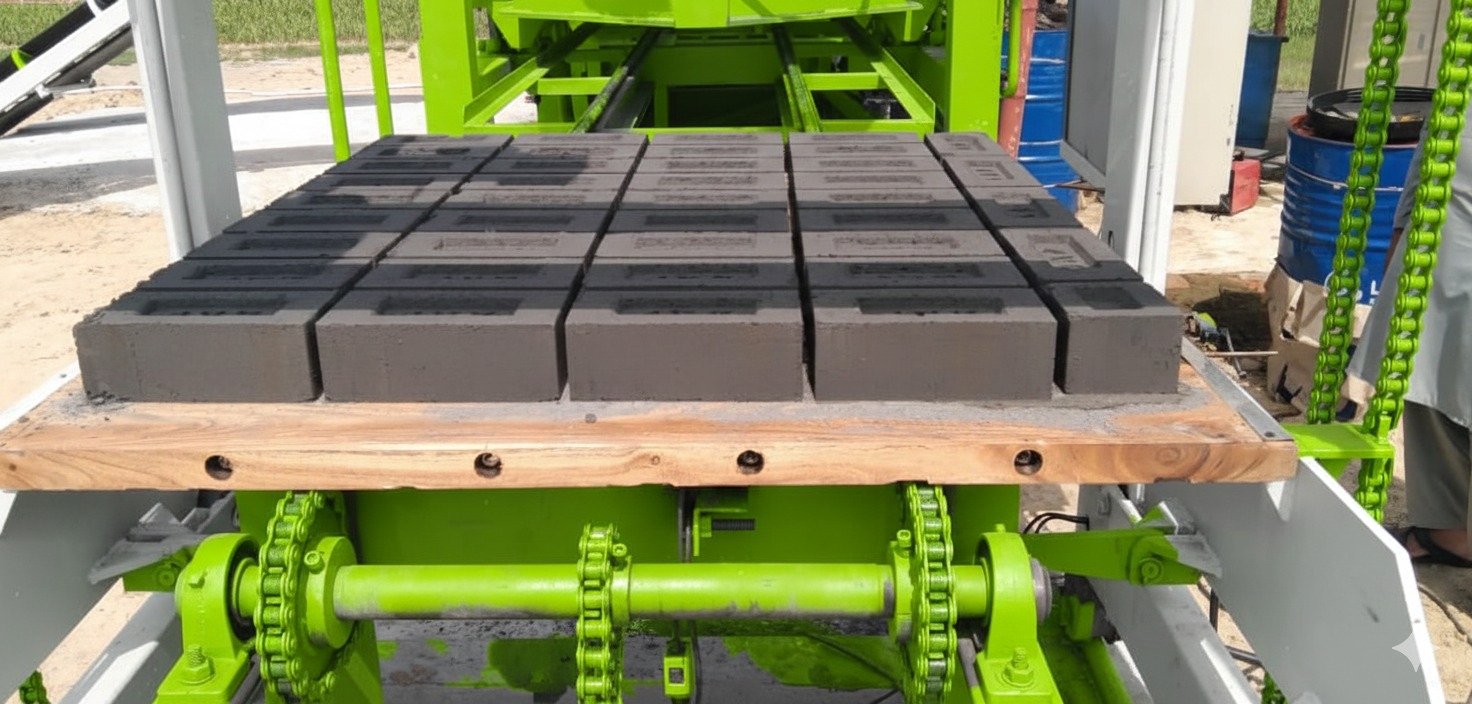
| Production Pallets | High-grade Kikar wood or PVC pallets (Approx. 1,500 units) | 600,000 – 1,200,000 |
| Site Infrastructure | Land leveling, curing water tanks, and shed construction | 1,000,000 – 2,000,000 |
| Total Estimated Initial Setup | Medium-to-High Capacity Commercial Unit | PKR 8,300,000 – 16,000,000 |
Infrastructure and Land Layout Optimization
A standard commercial paver block setup requires a minimum land area of 2 to 4 Kanals. The layout must be engineered properly to prevent cross-contamination of aggregates and to ensure smooth forklift or manual trolley movement.
Raw Material Storage Zone
This zone must be divided into separate bunkers for crushing dust (sub-0.5mm), fine sand, and coarse aggregates (3mm to 6mm). Keeping these materials dry is critical; excessive moisture in stored aggregate disrupts the automated water-cement ratio settings programmed into the mixing station.
The Mixing and Batching Station
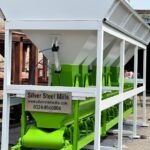
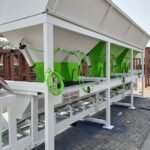
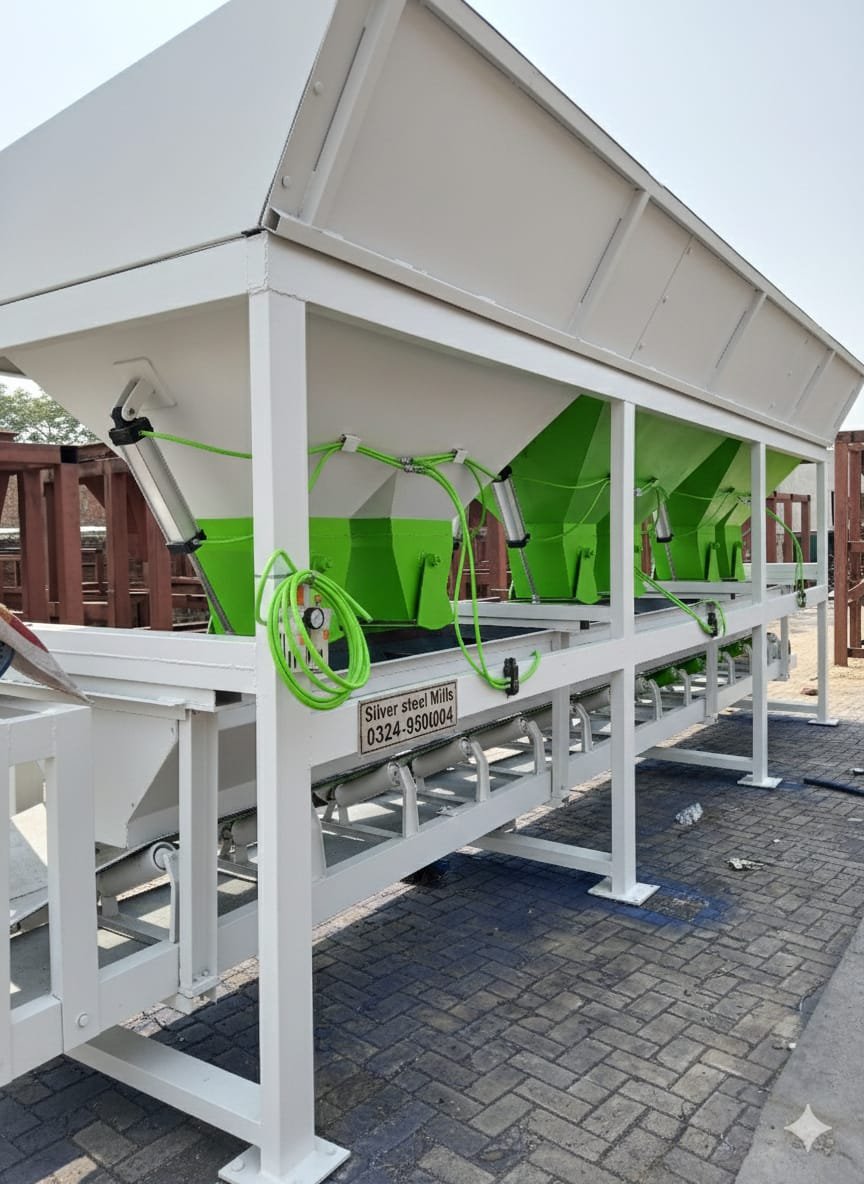
To achieve a compressive strength exceeding 4,000 PSI, manual volume batching (using wheelbarrows) must be avoided. Instead, weight-based batching via an automated hopper system ensures that every batch of concrete has the exact same ratio of cement to aggregate.
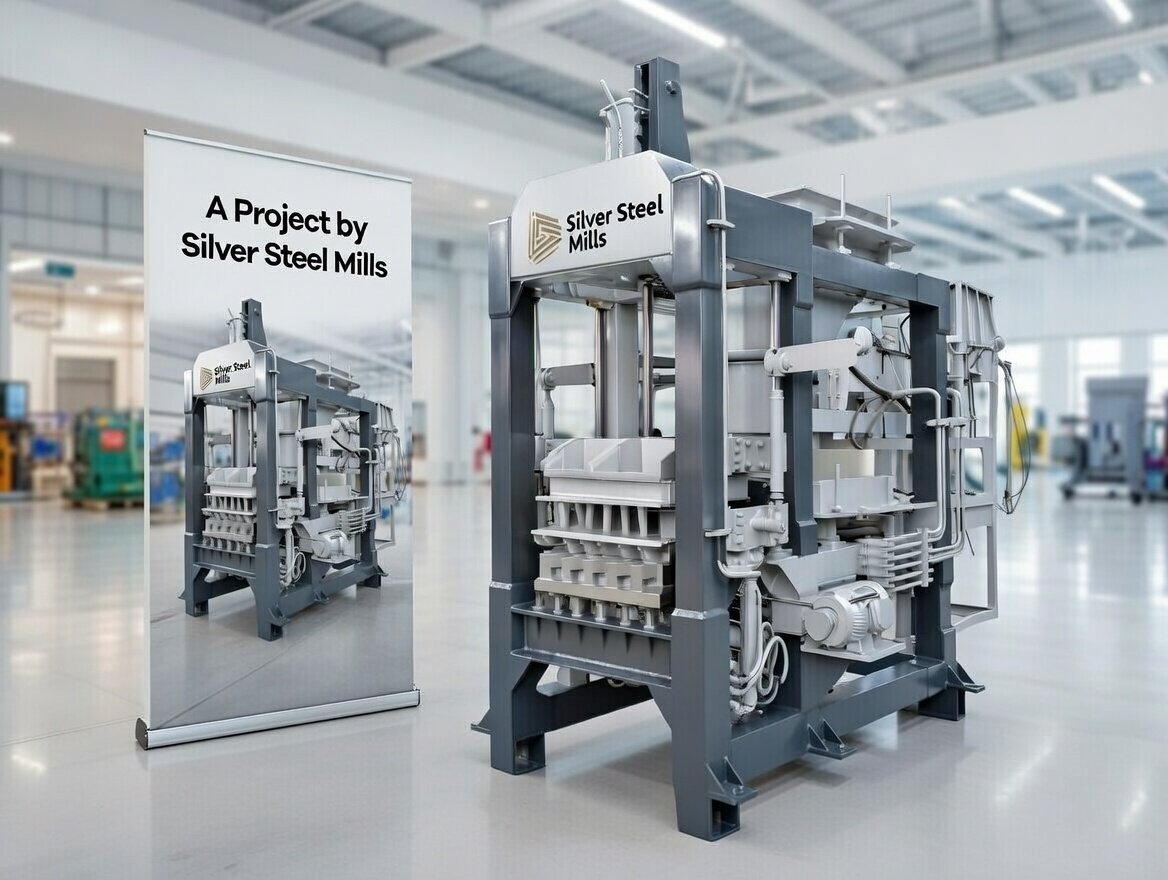
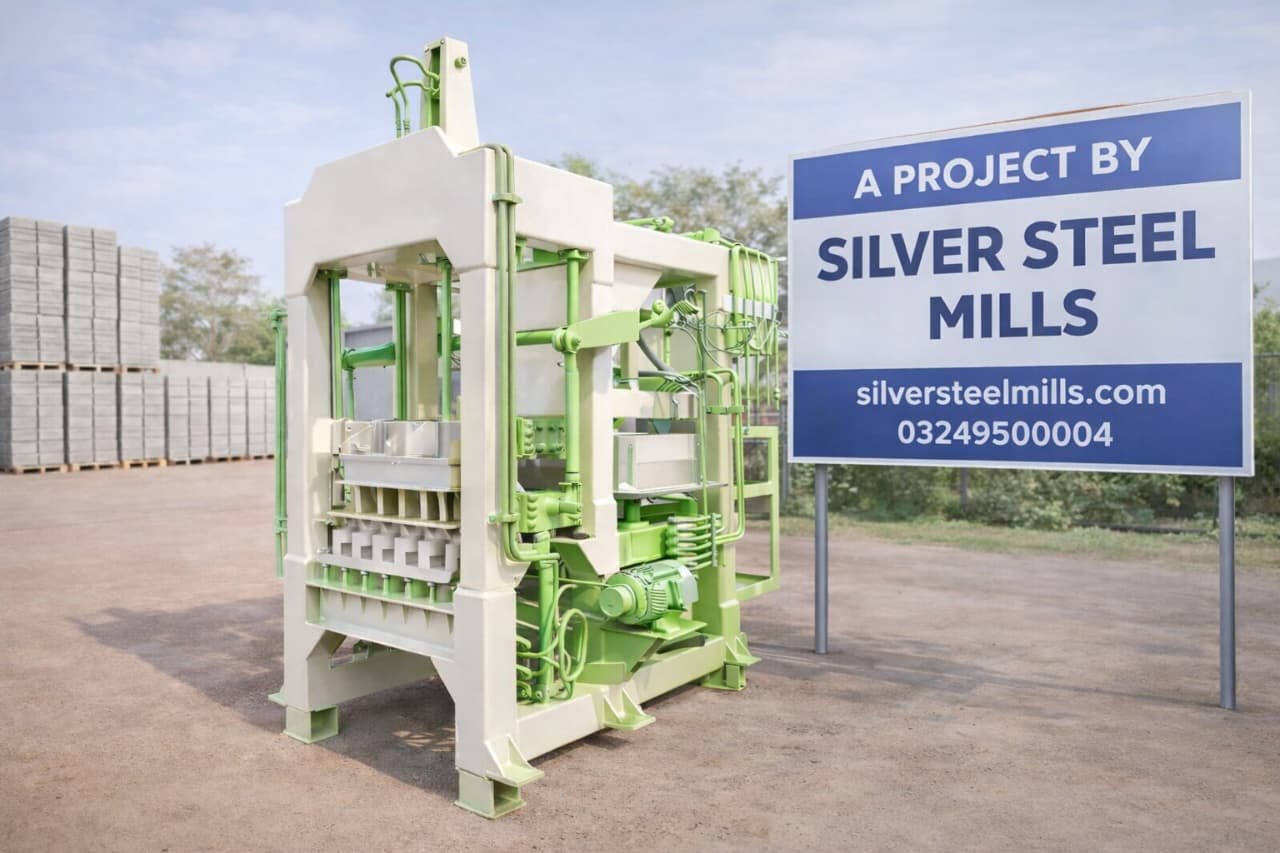
For commercial setups, investors look for reliable industrial engineers who understand heavy-duty structural fabrication. Leading manufacturing units source their customized setups through trusted local engineering firms like Silver Steel Mills, where heavy-duty batching plants and high-tonnage paver machinery are fabricated using reinforced steel frames to withstand continuous vibration cycles without structural warping.
Curing and Stacking Yard
Once the tiles are molded and transferred onto pallets, they must immediately go into the curing zone. In arid regions like Southern Punjab or Sindh, water-spray curing or steam-curing chambers are necessary to prevent rapid water evaporation, which stops the cement from hydrating fully and results in brittle tiles.
Optimizing Raw Material Ratios for Higher Profit Margins
The profitability of a tuff tile factory relies on optimizing the mix design. A common mistake is adding excessive cement to compensate for poor sand quality. This practice drives up production costs and lowers competitive margins.
An ideal industrial mix design for high-strength road pavers consists of:
- 1 Part: Ordinary Portland Cement (OPC Grade 53)
- 2 Parts: Clean Crushing Dust (free from clay particles)
- 3 Parts: Coarse Aggregate / Fine Bajri (3mm to 5mm size)
- Admixtures: Plasticizers ($0.5% text{ to } 1%$ by cement weight) to reduce water demand while maintaining flowability during molding.
Industrial Frequently Asked Questions (FAQs)
Q1: What is the average payback period (ROI) for an automatic tuff tile factory?
Answer: Under normal market conditions with a 60% plant capacity utilization rate, a well-managed factory supplying housing schemes can recover its initial capital investment within 14 to 18 months.
Q2: Why are the edges of my interlocking tiles breaking during stacking?
Answer: This issue points to low initial green strength. It happens if the top hydraulic pressure is insufficient, the moisture in the mix is too low, or the tiles were moved to the curing yard before the initial setting time was complete.
Q3: Is it necessary to buy a separate machine for hollow blocks and tuff tiles?
Answer: No. Modern automatic block making machines are multi-functional. You only need to change the mold assembly inside the main press frame to switch production from interlocking tuff tiles to load-bearing hollow blocks or solid bricks.
Q4: Which pallet material is best for high-vibration automatic machines?
Answer: While PVC and composite plastic pallets offer the longest lifespan, properly seasoned Kikar wood pallets remain the most cost-effective solution in Pakistan, provided they are treated to resist water absorption.
Q5: How much electrical power supply is required to run a complete automatic paver plant?
Answer: A standard integrated setup consisting of the main molding press, conveyor belts, hydraulic station, and twin-shaft mixer requires a dedicated 3-phase industrial connection with a minimum load capacity of 35 kW to 50 kW.